
HorseSport.com - Full Article
The FEI Tribunal said there was a clear pattern to the arsenic use, and drew ‘adverse inference’ from the Omani rider’s failure to respond.
By: Pippa Cuckson | April 14, 2020
An Omani endurance rider has been handed a three-year suspension and FEI record fine of 10,000 Swiss francs ($14,475 CAD) by the FEI Tribunal after two different horses tested positive to arsenic on consecutive weekends.
Said al Balushi’s ride Kekmadar (trainer: Rashed Suhail al Darbi, UAE) was sampled at in the CE1* 100 at Al Wathba, Abu Dhabi on December 8, 2018, with Si Quilombo (trainer: Joynal Abedin, Bangladesh/UAE) sampled on December 15, 2018, also at Al Wathba.
Save for requesting a test of the B sample, the rider did not respond to any communications from the FEI or provide a written explanation for the presence of the banned substance, from which Tribunal member Cesar Torrente, sitting as a panel of one, drew an “adverse inference.”
The FEI legal department had recommended a two-year suspension and 7,500 Swiss franc fine, but the Tribunal said tougher penalties were justified...
Read more here:
https://horsesport.com/horse-news/three-year-ban-record-fine-endurance-arsenic-offences/?utm_source=ActiveCampaign&utm_medium=email&utm_content=Eric+Lamaze++Unbridled++%7C+Major+Nations+Cup+Rule+Update+%7C+Double+Bridles&utm_campaign=HS-Enewsletter2019-Friday-April+17%2C+2020
Sunday, April 19, 2020
Friday, April 17, 2020
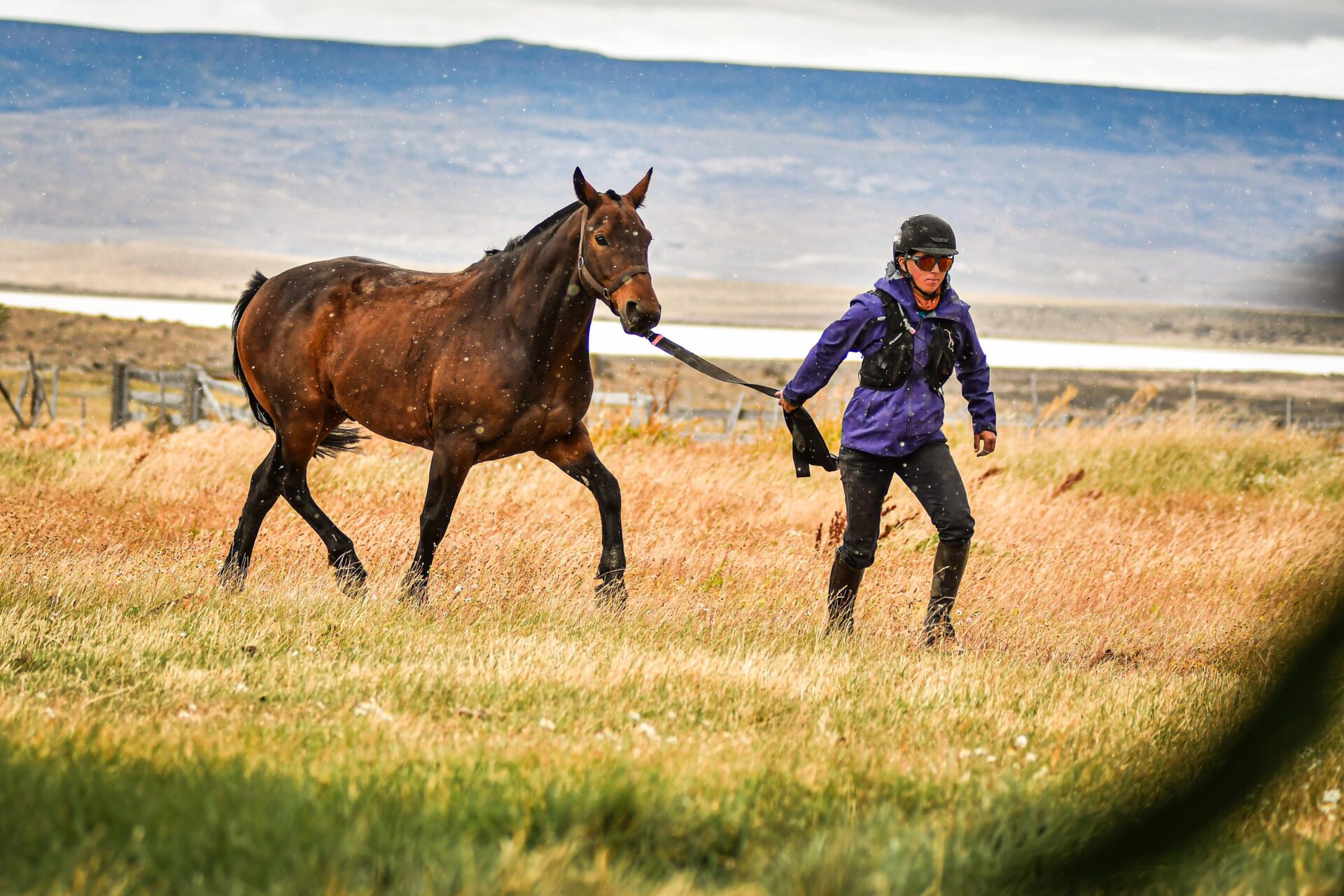
The Inaugural Gaucho Derby Unfolded as the WHO Declared a Pandemic—Getting Home was Almost as Hard as Finishing the Race
 Anya Campbell photo
 HorseNetwork.com - Full Article
Liz Brown
April 15, 2020
If the last month has shown us anything, it’s that a lot can change in just a few days.
That’s certainly what the pioneers of the inaugural Gaucho Derby discovered.
When they embarked on the epic 310 mile multi-horse race through the wilds of Patagonia, Argentina, on March 6, the world looked very different. Coronavirus had not yet forced Italy into a lockdown and there were less than 500 confirmed cases of COVID-19 in the U.S.
“Everyone had heard about coronavirus, but it wasn’t really on our radar as something that could impact us in a remote part of Argentina,” said race event manager Erik Cooper.
The riders had other things on their minds at the time—they were focused on surviving the race where they were only allowed to carry 22 pounds of gear, including their own food— through some of the wildest and harshest terrain on the planet. The race is put on by The Adventurists, the same company that organizes the Mongol Derby...
Read more here:
https://horsenetwork.com/2020/04/the-inaugural-gaucho-derby-unfolded-as-the-who-declared-a-pandemic-getting-home-was-almost-as-hard-as-finishing-the-race/?utm_source=Horse+Network+Email+List&utm_campaign=200184fd53-HN_2020_4_17_2020&utm_medium=email&utm_term=0_5694ca6b0c-200184fd53-84641243&goal=0_5694ca6b0c-200184fd53-84641243&mc_cid=200184fd53&mc_eid=b3c9897994
Thursday, April 16, 2020
Great Britain: Clare returns from ride of a lifetime
 Farmweek.com - Full Article
By Bree Rutledge
April 14, 2020
CLARE King (nee Twemlow), originally from Holywood, Co. Down, recently returned from participating in the first ever Gaucho Derby, crossing 500km of beautiful yet challenging terrain in the Patagonian Andes in South America. The multi-horse endurance race ran from March 5 until 14 and, while the rest of the world was beginning the battle against Corona virus, the Gaucho Derby was able to go ahead, as Patagonia, a sparsely populated region at the southern end of South America, shared by Argentina and Chile, was at that time unaffected.
Clare’s aim on completing this challenge was to raise £10,000 for Children’s Cancer and Leukaemia Group (CCLG).
Clare writes:
all,
Now that I have returned from the wilds of Patagonia, where I was blissfully unaware of the Corona virus crisis unfolding, I wanted to take the opportunity to thank all of you who have been so very generous in sponsoring me. So far I have raised over £8,000 towards my £10,000 target for the Children’s Cancer and Leukaemia Group (CCLG). Your support really means a lot, thank you.
I have been incredibly lucky to enjoy and survive an amazing adventure. Patagonia is one of the most remote and uninhabited places on earth, but the mountains were both brutal and beautiful in equal measure. The navigation was tough and having a pack horse to contend with added an extra dimension...
Read more here:
https://farmweek.com/clare-returns-from-ride-of-a-lifetime/
Tuesday, April 14, 2020
Great Britain: Clare claims second place in first ever Gaucho Derby
 Farmweek.com - Full Article
By Bree Rutledge
April 14, 2020
CLARE King (nee Twemlow), originally from Holywood, Co. Down, has reflected on completing the race of her life in South America in early March.
Clare, raising money for Children’s Cancer and Leukaemia Group (CCLG), braved the first-ever Gaucho Derby, a 500km multi-horse endurance race taking her through the Patagonian Andes. Swapping horses regularly, her navigation and survival skills were tested to the limit in the “world’s toughest horse race”, in which she eventually finished second. The weather also proved a major challenge...
Read more here:
https://farmweek.com/clare-claims-second-place-in-first-ever-gaucho-derby/
Monday, April 13, 2020
Western States Trail Ride and Tevis Educational Ride - Cancelled
 Teviscup.org
Posted Saturday, April 11, 2020 8:04pm
Due to the COVID-19 viral pandemic, the Western States Trail Foundation Board of Governors (Board) has made the very difficult decision to cancel this year’s running of the Tevis Cup 100-Mile One-Day Endurance Ride, scheduled for August 1, 2020. Additionally, the Board is cancelling the Tevis Educational Ride which was scheduled for July 3-5.
Consideration for the health and safety of the endurance riding community, our generous volunteers, veterinarians, and the public in general are our foremost concerns in making this decision. In the 64-year history of the Western States Trail Ride, this is the first time that the Board has voted to cancel the Tevis. These are truly unique circumstances.
While the Board explored the option of moving the event to the fall, it was decided that the same health risks that prompted the August 1st cancellation could likely still continue, thus preventing riders the ability to adequately prepare for the ride and making it difficult for the Board to plan for a new date.
This was a very difficult decision for the Board, as we understand the love and passion so many have for this event. We will be back stronger than ever for 2021. Please be safe and well as we rise to meet this global challenge by working together while staying apart.
Those riders who have already entered either of these events will be contacted soon regarding refunding their entries.
Saturday, April 11, 2020
Saddle up for stellar views and gaucho culture in Patagonia
NationalGeographic.com - Full Article and photos
At Argentina’s isolated ranches, stunning mountains, homegrown food, and cowboy customs reign.
BY LIZ BEATTY
BEYOND THE TREELESS spine of the Andes’ Desecho pass in Argentina’s far northern Patagonia, below a steep 1,500-foot scree slope, on the far end of a lush spring-fed pasture—it’s here Saul Jara tends his herds each summer.
Jara and his family have been puesteros (a type of gaucho) for generations. It is a life of seasonal rhythms, moving their goats, cows, and horses between winter invernada lowlands and summer veranada mountain pastures. His government-granted rights to this grazing foothold on public land have been passed down father to son.
A proud Criollo gelding stands tethered outside Jara’s puesto—a corrugated iron shack with no plumbing or electricity where Jara stays. Inside, a blackened pot of goat lard boils over an open fire. Flattened balls of dough sit nearby, ready for a feast of fresh tortas fritas (fried bread). Jara beckons us from his door with a broad smile and his boina cap off, as is customary when gauchos share a meal...
Read more and see photos here:
https://www.nationalgeographic.com/travel/go-off-the-grid-at-horse-ranches-in-patagonia/?cmpid=org=ngp::mc=crm-email::src=ngp::cmp=editorial::add=SpecialEdition_Escape_20200409&rid=BB6673C4CE72E9E250D0E59D22726895
At Argentina’s isolated ranches, stunning mountains, homegrown food, and cowboy customs reign.
BY LIZ BEATTY
BEYOND THE TREELESS spine of the Andes’ Desecho pass in Argentina’s far northern Patagonia, below a steep 1,500-foot scree slope, on the far end of a lush spring-fed pasture—it’s here Saul Jara tends his herds each summer.
Jara and his family have been puesteros (a type of gaucho) for generations. It is a life of seasonal rhythms, moving their goats, cows, and horses between winter invernada lowlands and summer veranada mountain pastures. His government-granted rights to this grazing foothold on public land have been passed down father to son.
A proud Criollo gelding stands tethered outside Jara’s puesto—a corrugated iron shack with no plumbing or electricity where Jara stays. Inside, a blackened pot of goat lard boils over an open fire. Flattened balls of dough sit nearby, ready for a feast of fresh tortas fritas (fried bread). Jara beckons us from his door with a broad smile and his boina cap off, as is customary when gauchos share a meal...
Read more and see photos here:
https://www.nationalgeographic.com/travel/go-off-the-grid-at-horse-ranches-in-patagonia/?cmpid=org=ngp::mc=crm-email::src=ngp::cmp=editorial::add=SpecialEdition_Escape_20200409&rid=BB6673C4CE72E9E250D0E59D22726895
Friday, April 10, 2020
A Look Back: Spain's 2008 Al Andalus 10-day Endurance Ride - Part II: Preparations
March 27, 2008
by Steph Teeter
Merri and I are now at the TRH Motilla Hotel, in Dos Hermanas, just outside of Sevilla (Seville). We had a late dinner last night at the Hotel Occidental in Sevilla (11pm, just before the closed) and then totally crashed around 1am. The first real sleep since we left Oreana, we didn't come alive again until 11am the next day!
We had lunch at the hotel (too late for breakfast) and did some last minute shopping - a phone card for Merri, a book on Andalucia, cash at the ATM, and then gathered our maletas muchas pesadas [very heavy suitcases!] and took another taxi to the next stop at Dos Hermanas.
I spoke with Paco a couple times today - he's been driving the new van from Madrid to go pick up his horses and bring them here this evening (I think) or perhaps tomorrow morning. I haven't had a lot of quality communication with him, just short conversations in Spanish-accented English and/or English-accented Spanish on a cellphone from inside a truck - which has left me with a little bit of information, and a bit of wondering... but I think it's all going to work out :)
Registration and vetting begins March 28 at the Betis Stadium (soccer), meetings and press and final entries in the early afternoon.
And then at 4pm all of the riders will do a 10km (6 mi) run/ride around the stadium (I wonder how many laps that is) for opening ceremonies - there will be a lot of press, tv, etc.
This is a very big deal, well organized, high profile event here. Merri said, 'Great, so all the horses will gallop around the track together and the riders that can stay on get to start the next morning'. It does conjure up some interesting images... I guess the photos will tell all.
March 29 will be the start, from Mairena del Aljarafe (outside Sevilla) to El Rocio, located near the Parque Nacional de Donana - a large estuary along the Rio Gualdalquivir.
The weather was gorgeous today - a high of 76, nice breeze, mostly sunny with a few spring clouds drifting by.
Some Seville info:
(from http://www.andalucia.com/cities/sevilla.htm ) "According to legend, Sevilla was founded by Hercules and its origins are linked with the Tartessian civilisation. It was called Hispalis under the Romans and Isbiliya with the Moors. Its high point in its history was following the discovery of America.
Sevilla lies on the banks of the Guadalquivir and is one of the largest historical centres in Europe, it has the minaret of La Giralda, the cathedral (one of the largest in Christendom), and the Alcazar Palace. Part of its treasure include Casa de Pilatos, Torre del Oro, the Town Hall, Archive of the Indies (where the historical records of the American continent are kept), the Fine Arts Museum (the second largest picture gallery in Spain) , plus convents, parish churches and palaces.
For all its important monuments and fascinating history, Sevilla is universally famous for being a joyous town. While the Sevillians are known for their wit and sparkle, the city itself is striking for its vitality. It is the largest town in Southern Spain, the city of Carmen, Don Juan and Figaro.
The Sevillians are great actors and put on an extraordinary performance at their annual Feria de Abril, a week-long party of drink, food and dance which takes place day and night in more than a thousand especially mounted tents. But above all it allows the men to parade on their fine horses and the women to dance in brilliantly coloured gypsy dresses.
Immediately before that is Holy Week, Semana Santa, a religious festival where hooded penitents march In long processions followed by huge baroque floats on which sit Images of the Virgin or Christ, surrounded by cheerful crowds. Both Spring events are well worth experiencing."
Gastronomy
Seville is a gastronomic centre, with a cuisine based on the products of the surrounding provinces, including seafood from Cadiz, olive oil from Jaen, and sherry from Jerez de la Frontera.
The tapas scene is one of the main cultural attractions of the city: people go from one bar to another enjoying small dishes called tapas (literally "lids" or "covers" in Spanish, referring to their origin as snacks served in small plates used to cover drinks.)
Local specialities include fried and grilled seafood (including squid, cuttlefish, swordfish and dogfish), grilled meats in sauces, spinach and chickpeas, Andalusian ham (Jamon iberico), lamb's kidneys in a sherry sauce, snails, and gazpacho.
Typical sweet cakes of this province are polvorones and mantecados from the town of Estepa, a kind of shortcake made with almonds, sugar and lard; Pestinos, a honey-coated sweet fritter; Roscos fritos, deep-fried sugar-coated ring doughnuts; magdalenas or fairy cakes; yemas de San Leandro, which provide the city's convents with a source of revenue, and Tortas de aceite, a thin sugar-coated cake made with olive oil.
Except for "polvorones" and "mantecados", which are traditional Christmas products, all of these are consumed throughout the year. The Seville oranges that dot the city landscape, too sour for modern tastes, are commonly used to make marmalade.
Flamenco and Sevillana
The Sevillana dance, commonly presented as flamenco, is not thought to be of Sevillan origin. But the folksongs called Sevillanas are authentically Sevillan, as is the four-part dance that goes with them.
Seville, and most significantly the traditionally barrio, Triana, was a major centre in the development of flamenco.
Steph
Part I: The Travels is here
Subscribe to:
Comments (Atom)
Gaucho Derby 2026 – Day 6 – Weather Turns. Race Ignites.
Equestrianists.com - Full Article Stevie Delahunt 23rd February 2026 The constant winds have finally brought some change. In the weathe...
-
Inside.fei.org 17 December 2020 The FEI Board took a series of key decisions on allocation, cancellation, and reopening of bids for FEI C...
-
 Michael Pollard was one of the four winners of the 2025 Mongol Derby (Kathy Gabriel) Ca.News.yahoo.com - Full Article Annabel Grossman ...
 -
BNA.bh - Full Article 17 Aug 2025 London, Aug. 17 (BNA): His Highness Shaikh Nasser bin Hamad Al Khalifa, Representative of His Majes...
