
Telegraph.co.uk - Full Article
By Pippa Cuckson
Published: 6:24PM GMT 27 Nov 2009
The levels at which controversial anti-inflammatories can be tolerated in equine sport were advised by team vets from Germany and USA, two of the federations that spoke against them, it has emerged.
In a letter defending last week's vote by the International Equestrian Federation (FEI), its president HRH Princess Haya stressed the right of the majority to decide - the substances were approved by 53-48, with most European federations voting against.
Princess Haya said the levels were in line with those applied for non-steroidal anti inflammatory (NSAID) use in humans by the World Anti Doping Agency and had been advised by "experienced national team veterinarians".
The aim was to enable supervised treatment no more than 12 hours before competition so that the medication was 'performance restoring' rather than 'performance enhancing'.
Europe, which organises 80 per cent of world equestrian sport, has damned the move.
Princess Haya was replying to a letter from Prof Leo Jeffcott and other distinguished international veterinary surgeons who urged a re-think on the FEI's newly approved "progressive" medications list which they feared would lead to horse abuse.
More...
Friday, November 27, 2009
FEI painkillers rules contradicts their research in 2004
Horseandhound.co.uk - Full Article
Charlotte White, H&H deputy news editor
26 November, 2009
Horse & Hound has uncovered paperwork that shows the International Equestrian Federation's (FEI) decision to allow horses to compete on painkillers is in direct contradiction to research they undertook five years ago.
At the 2004 FEI General Assembly national federations agreed to cut the allowable level of salicylates (asprin) from the level they are now proposing because they believed it was open to abuse by "topping up".
In the release from 2004 the FEI says: "The 2004 FEI General Assembly agreed to change the threshold for salicylates, in line with the proposals submitted by the Veterinary Committee.
"The previous thresholds for salicylates were 750 µg/ml in urine and 6.5 µg/ml in plasma. Experiences in testing had indicated that abuse of salicylates was possible, obtaining a clinical effect in the horse by administration of low doses without exceeding the threshold."
More...
Charlotte White, H&H deputy news editor
26 November, 2009
Horse & Hound has uncovered paperwork that shows the International Equestrian Federation's (FEI) decision to allow horses to compete on painkillers is in direct contradiction to research they undertook five years ago.
At the 2004 FEI General Assembly national federations agreed to cut the allowable level of salicylates (asprin) from the level they are now proposing because they believed it was open to abuse by "topping up".
In the release from 2004 the FEI says: "The 2004 FEI General Assembly agreed to change the threshold for salicylates, in line with the proposals submitted by the Veterinary Committee.
"The previous thresholds for salicylates were 750 µg/ml in urine and 6.5 µg/ml in plasma. Experiences in testing had indicated that abuse of salicylates was possible, obtaining a clinical effect in the horse by administration of low doses without exceeding the threshold."
More...
Wednesday, November 25, 2009
British vets say bute in competition will lead to 'catastrophic injuries'
Horseandhound.co.uk - Full Article
Abigail Butcher, H&H head of news
25 November, 2009
Leading equine vets in Britain have slammed a decision to allow horses to compete on painkillers. They say using bute on a competition horse could lead to "catastrophic injuries".
The British Equine Veterinary Association (BEVA) says the International Equestrian Federation's (FEI) decision to allow six medications in competition is an "extremely retrograde step for horse welfare".
"This decision obscures the distinction between therapy and subjecting unsound horses to the stresses of competition," said a statement from the group of leading horse vets.
"Furthermore, we have grave concerns that horses competing while under treatment with pain-relieving medicines, are at an increased risk of musculo-skeletal lesions progressing to catastrophic injuries."
As part of its so-called "clean sport programme" the FEI decided last week to allow six substances — many of which are painkilling — to be used during competition.
Before that, the FEI has always had a "zero tolerance" policy on drugs in sport, and the about-turn caused outrage.
More...
Abigail Butcher, H&H head of news
25 November, 2009
Leading equine vets in Britain have slammed a decision to allow horses to compete on painkillers. They say using bute on a competition horse could lead to "catastrophic injuries".
The British Equine Veterinary Association (BEVA) says the International Equestrian Federation's (FEI) decision to allow six medications in competition is an "extremely retrograde step for horse welfare".
"This decision obscures the distinction between therapy and subjecting unsound horses to the stresses of competition," said a statement from the group of leading horse vets.
"Furthermore, we have grave concerns that horses competing while under treatment with pain-relieving medicines, are at an increased risk of musculo-skeletal lesions progressing to catastrophic injuries."
As part of its so-called "clean sport programme" the FEI decided last week to allow six substances — many of which are painkilling — to be used during competition.
Before that, the FEI has always had a "zero tolerance" policy on drugs in sport, and the about-turn caused outrage.
More...
Aachen takes a stand for clean horse sport and will not allow bute
Horseandhound.co.uk - Full Article
Abigail Butcher, H&H head of news
25 November, 2009
One of the most prestigious events in the horse sport calendar has been the first to take a stand against the International Equestrian Federation's (FEI) rule to allow bute in competition.
Horses will not be allowed to compete at the World Equestrian Festival, CHIO Aachen in Germany next year if they have been given bute or any of the other five controversial substances permitted by the FEI last week.
"We do not want unsound or injured horses in our sport," said Michael Mronz, general manager of the Aachener Reitternier GmbH.
"The CHIO Aachen 2010 will not be carried out on the basis of the current FEI regulations, but according to the ethics of clean sport."
More...
Abigail Butcher, H&H head of news
25 November, 2009
One of the most prestigious events in the horse sport calendar has been the first to take a stand against the International Equestrian Federation's (FEI) rule to allow bute in competition.
Horses will not be allowed to compete at the World Equestrian Festival, CHIO Aachen in Germany next year if they have been given bute or any of the other five controversial substances permitted by the FEI last week.
"We do not want unsound or injured horses in our sport," said Michael Mronz, general manager of the Aachener Reitternier GmbH.
"The CHIO Aachen 2010 will not be carried out on the basis of the current FEI regulations, but according to the ethics of clean sport."
More...
Senior vets demand Princess Haya reopens 'bute debate'
Horseandhound.co.uk - Full Article
Abigail Butcher, H&H head of news
25 November, 2009
British vets say bute in competition will lead to 'catastrophic injuries'
Senior vets from around the world have written to FEI president Princess Haya condemning the decision to allow medication in competition horses.
The letter has been written by Prof Leo Jeffcott and signed by leading vets from the UK, France, Germany, USA, Australia and Finland.
"We believe a decision has been made that was premature, ill-considered and seriously retrograde," say the equine vets. "This decision will have a serious and negative effect on welfare and profound repercussions for equestrian sport."
More...
Abigail Butcher, H&H head of news
25 November, 2009
British vets say bute in competition will lead to 'catastrophic injuries'
Senior vets from around the world have written to FEI president Princess Haya condemning the decision to allow medication in competition horses.
The letter has been written by Prof Leo Jeffcott and signed by leading vets from the UK, France, Germany, USA, Australia and Finland.
"We believe a decision has been made that was premature, ill-considered and seriously retrograde," say the equine vets. "This decision will have a serious and negative effect on welfare and profound repercussions for equestrian sport."
More...
World of equestrianism dismayed after FEI take 'bute' off banned list
Telegraph.co.uk - Full Article
By Pippa Cuckson
19 Nov 2009
The controlled use of phenylbutazone ("bute"), banned 20 years ago, and two other anti-inflammatories will be allowed in competition after the International Equestrian Federation (FEI) voted to reintroduce them by 53-42, to audible gasps of dismay from the floor.
Major equestrian federations including the USA, Sweden, Germany, New Zealand, Australia and Ireland spoke passionately against the move at the FEI's General Assembly in Copenhagen yesterday, but with many third countries emerging in the sport with limited expertise in the management of the soundness of top class competition horses, the argument against was always going to be difficult to win.
A wide package of anti-doping reforms were passed by 90 votes to eight, but the controversy lay in the separate choice between continuing with the current list of prohibited substances, and adopting a "progressive list."
The latter does not prohibit phenylbutazone (up to 8 mcg/ml in plasma or serum), three times the level tolerated in the 1980s before the ban, salicyclic acid (up to 750mcg/ml in urine and up to 6.5 mcg/ml in plasma or serum) and flunixin (up to 500 mcg/ml in plasma or serum,) so long as those substances are not detected in a horse's sample above the prescribed limits noted and are used in isolation and not combined.
More...
By Pippa Cuckson
19 Nov 2009
The controlled use of phenylbutazone ("bute"), banned 20 years ago, and two other anti-inflammatories will be allowed in competition after the International Equestrian Federation (FEI) voted to reintroduce them by 53-42, to audible gasps of dismay from the floor.
Major equestrian federations including the USA, Sweden, Germany, New Zealand, Australia and Ireland spoke passionately against the move at the FEI's General Assembly in Copenhagen yesterday, but with many third countries emerging in the sport with limited expertise in the management of the soundness of top class competition horses, the argument against was always going to be difficult to win.
A wide package of anti-doping reforms were passed by 90 votes to eight, but the controversy lay in the separate choice between continuing with the current list of prohibited substances, and adopting a "progressive list."
The latter does not prohibit phenylbutazone (up to 8 mcg/ml in plasma or serum), three times the level tolerated in the 1980s before the ban, salicyclic acid (up to 750mcg/ml in urine and up to 6.5 mcg/ml in plasma or serum) and flunixin (up to 500 mcg/ml in plasma or serum,) so long as those substances are not detected in a horse's sample above the prescribed limits noted and are used in isolation and not combined.
More...
Petition against the FEI - "Progressive List"

A petition was started on 23 November 2009 opposing the "Progressive List" of substances approved by the FEI for the welfare of the horse, at the FEI's General Assembly in Copenhagen on 18 November. This list allows, among other previously banned substances, the use of "Bute" in certain amounts and two other anti-inflammatories, as part of the FEI's "Clean Sport" campaign.
The vote which approved the Progessive List caused shockwaves throughout the horse world.
Frank Kemperman, FEI Dressage Committee chairman and CHIO Aachen show director said, "In an attempt to improve the situation, it went completely insane. They now have allowed limits of a certain substance that can make a lame horse go sound. This has never been the intention."
German NF secretary-general Sonke Lauterbach called it "a disaster" and said "it is a clear step backwards on our way to a clean equestrian sport. The Progressive List does not answer to our image of healthy, unmanipulated horses in competition."
In the U.S., AERC president Connie Caudill commented: " It would be hard for me to think that this vote was pushed through from the endurance world. I am certain the US endurance world had nothing to do with pushing this new ruling through. As far as I can see the US (especially when it comes to endurance) has very little, if any, influence on FEI anyway. FEI is made up of many different equine disciplines that are not accustomed to endurance strict drug rules, so it is my belief that some of these may have influenced the FEI decision. It is unfortunate for FEI's equines long term welfare as they will suffer because of this ruling. I [am] confident AERC members will continue to do what is best for their horses long term health in keeping them virtually drug free during competition as our horses always come first."
A partial list of the drugs on the "Progressive List" and their amounts can be seen in this article in the Telegraph.co.uk.
The Petition against the FEI "Progressive List" can be seen at www.no-fei.com. The petition will remain on-line at least until mid-December. After that, the signatures will be printed out and sent to the FEI.
"The signatories, ask the Federation Equestrian International not to apply the resolutions of the so called 'Progressive List'. It violates animal welfare to allow a horse to show in a competition although it needs painkillers. We request the FEI to immediately put their focus back on the welfare of the horse."
Subscribe to:
Comments (Atom)
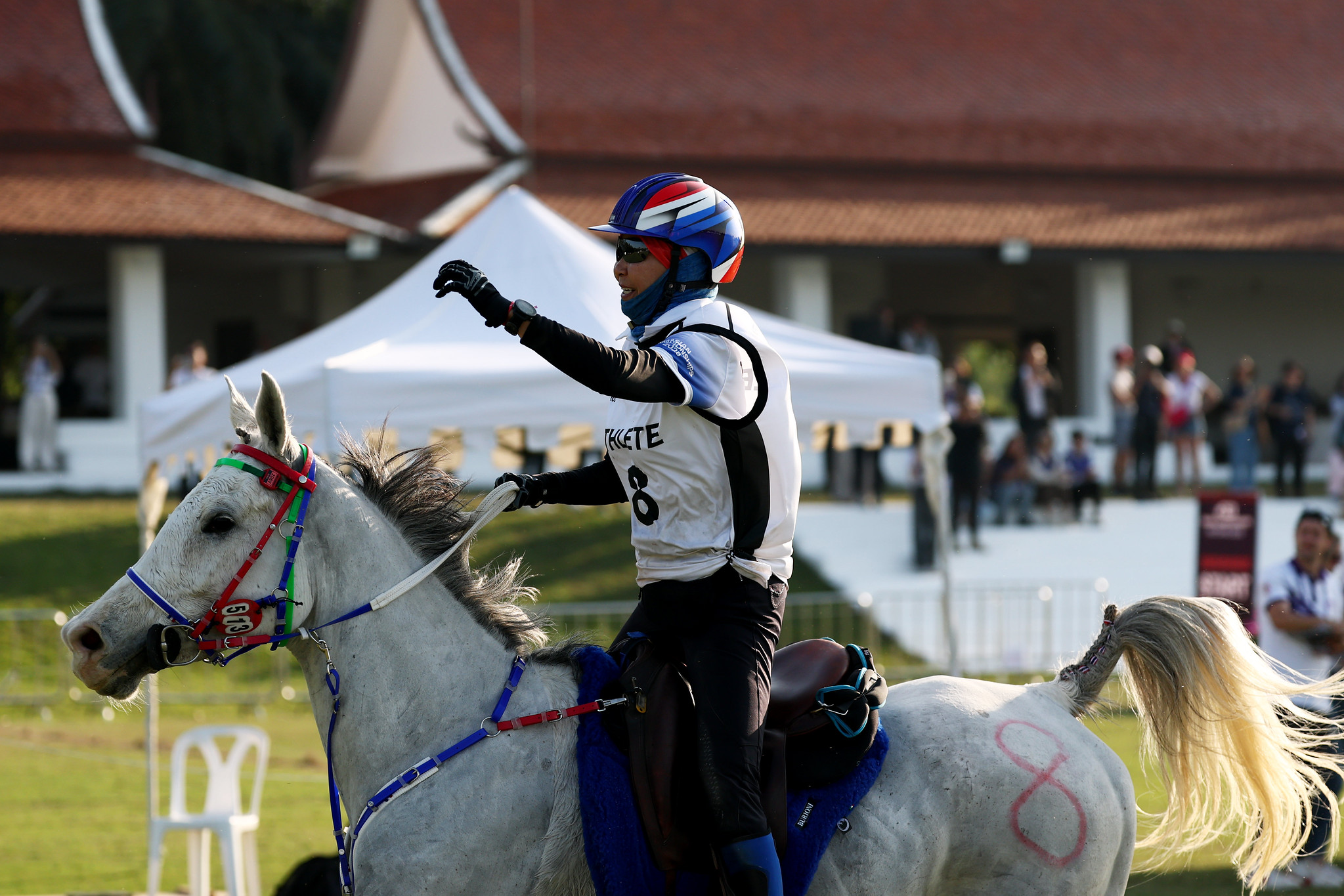
Wipawan Pawitayalarp: Meet Thailand’s Endurance Trailblazer
FEI.org - Full Story 17 April 2026 Words by Stacey Stearn The experienced athlete reflects on her career, her horses, and the path that ...
-
Inside.fei.org 17 December 2020 The FEI Board took a series of key decisions on allocation, cancellation, and reopening of bids for FEI C...
-
 Michael Pollard was one of the four winners of the 2025 Mongol Derby (Kathy Gabriel) Ca.News.yahoo.com - Full Article Annabel Grossman ...
 -
BNA.bh - Full Article 17 Aug 2025 London, Aug. 17 (BNA): His Highness Shaikh Nasser bin Hamad Al Khalifa, Representative of His Majes...
