
Horse-canada.com - Full Article
April 18, 2019
by: Pippa Cuckson
A complete change in mind-set is at the heart of the endurance reforms presented at the FEI Sports Forum earlier this week.
New measures will require horses and riders to upgrade by demonstrating consistency, with speeds capped at 18kph until they reach a 66% completion rate. This will force a radically new outlook on the younger generation, few of whom have experienced the slower-paced, classic form of endurance. If passed, the new rules will also seriously impact on the practice of racing “strange” horses at the upper levels – the norm in desert endurance.
This and other moves – notably curtailment of mobile crewing, breaking up “cliques” of officials, and emphasis on the horse-rider partnership – are likely to meet resistance from the FEI Group 7 countries (Middle East) in months to come.
The UAE owns or administers 5,403 (56.2%) of the global population of 9,612 endurance horses currently registered with the FEI. At the end of the debates, the Emirati federation’s secretary-general Dr Ghanem Alhajri made an impassioned speech about the likely economic impact of the changes, and their capacity to “punish” by default the owners who invest...
Read more here:
https://horse-canada.com/horse-news/new-mind-set-heart-latest-endurance-reforms/
Thursday, April 18, 2019
Clean Endurance welcomes FEI Endurance Temporary Committee’s suggestions for reshaping Endurance
PRESS INFORMATION FROM CLEAN ENDURANCE
18 April 2019
Immediate Release
Clean Endurance is heartened by the FEI’s expression of their firm intent to move Endurance to a better place. The long list of proposals from the FEI Endurance Temporary Committee (ETC) presented during the second day of the FEI Sports Forum 2019 aims to combat the cheating, doping and abuse still rife in endurance. A large number of the most common abusive and fraudulent practices were documented in the “A to Z guide to spotting Cheating and Abuse” published by Clean Endurance in August 2018. This guide (attached) was produced in response to the many enquiries Clean Endurance receives from spectators, stakeholders and volunteers who are present at competitions and wish to assist the FEI in the fight against violations.
Clean Endurance applauds the emphasis on horsemanship and horse welfare the various members of the Endurance Temporary Committee made the centre of their respective presentations – ensuring these values come back to form the foundation of Endurance is the only way the sport can survive and thrive in the future.
Nearly all of the proposals brought forward by the Endurance Temporary Committee (ETC) have in the past been suggested to the FEI by Clean Endurance, albeit often in more stringent versions. These include qualifying as a combination, imposing minimum weight limits to reduce speeds, limiting the number of starters, imposing longer minimum loop lengths and more phases in the competition, limiting the number of crew members, shortening presentation times and lowering maximum heart rates, not allowing second presentations at Vet Gates, the introduction of tack and blood rules, extending the time limit for reporting rule violations and increasing sanctions for horse abuse.
Clean Endurance encourages and supports the FEI in taking forward the proposals as they stand today, with one caveat: the completion-rate based qualification is potentially cumbersome for Organising Committees and Officials and is thus vulnerable to fraud. Regrettably there are already many recorded examples of falsified qualifying results in our sport. Clean Endurance recommends instead the FEI examine the French ranking system for lower level National rides, which incorporates speed AND heart rate recovery. This system has worked on set speed rides in France for over 20 years, can be easily adopted for free speed rides, and rewards strategic riding and horsemanship without the need for capping speeds.
Clean Endurance has also asked the FEI to be mindful of the unintended potential negative consequences of extending the Mandatory Rest Periods (or ‘Mandatory Out Of Competition Periods’ as the current proposal names them) as they can potentially penalise amateur riders who compete only 1 or 2 horses, as well as the OC’s who put on technical, ‘old school’ rides to cater for this group.
It would also like to see the re-introduction of the 2-hour mandatory waiting period for invasive treatment after a horse has placed at an event. Far too often today, horses are in the clinic hooked up on drips while their ‘victorious’ riders are on the podium receiving their awards. Not allowing immediate invasive treatment will encourage riders to slow down and thus protect the horses.
The details of the many rule change proposals still need to be worked out by the ETC before the consultation process with the National Federations starts in early July.
Clean Endurance urges anyone with an interest in the sport to provide their comments and suggestions to contact.cleanendurance@gmail.com, to the FEI at endurance@fei.org, and to their respective National Federations who will ultimately vote on these proposals at the FEI General Assembly in November 2019.
Clean Endurance is a global collective of volunteers who are committed to restoring the traditional values of their sport. It has an informal working relationship with the FEI: several recent FEI rule changes, procedures as well as sanctions have been developed from matters they have raised.
Clean Endurance is happy to supply links for further reading, including coverage in bona fide news media.
Clean Endurance also welcomes comments and suggestions.
Find them on Facebook https://www.facebook.com/cleanendurance and contact them through the message button, or email contact.cleanendurance@gmail.com
18 April 2019
Immediate Release
Clean Endurance is heartened by the FEI’s expression of their firm intent to move Endurance to a better place. The long list of proposals from the FEI Endurance Temporary Committee (ETC) presented during the second day of the FEI Sports Forum 2019 aims to combat the cheating, doping and abuse still rife in endurance. A large number of the most common abusive and fraudulent practices were documented in the “A to Z guide to spotting Cheating and Abuse” published by Clean Endurance in August 2018. This guide (attached) was produced in response to the many enquiries Clean Endurance receives from spectators, stakeholders and volunteers who are present at competitions and wish to assist the FEI in the fight against violations.
Clean Endurance applauds the emphasis on horsemanship and horse welfare the various members of the Endurance Temporary Committee made the centre of their respective presentations – ensuring these values come back to form the foundation of Endurance is the only way the sport can survive and thrive in the future.
Nearly all of the proposals brought forward by the Endurance Temporary Committee (ETC) have in the past been suggested to the FEI by Clean Endurance, albeit often in more stringent versions. These include qualifying as a combination, imposing minimum weight limits to reduce speeds, limiting the number of starters, imposing longer minimum loop lengths and more phases in the competition, limiting the number of crew members, shortening presentation times and lowering maximum heart rates, not allowing second presentations at Vet Gates, the introduction of tack and blood rules, extending the time limit for reporting rule violations and increasing sanctions for horse abuse.
Clean Endurance encourages and supports the FEI in taking forward the proposals as they stand today, with one caveat: the completion-rate based qualification is potentially cumbersome for Organising Committees and Officials and is thus vulnerable to fraud. Regrettably there are already many recorded examples of falsified qualifying results in our sport. Clean Endurance recommends instead the FEI examine the French ranking system for lower level National rides, which incorporates speed AND heart rate recovery. This system has worked on set speed rides in France for over 20 years, can be easily adopted for free speed rides, and rewards strategic riding and horsemanship without the need for capping speeds.
Clean Endurance has also asked the FEI to be mindful of the unintended potential negative consequences of extending the Mandatory Rest Periods (or ‘Mandatory Out Of Competition Periods’ as the current proposal names them) as they can potentially penalise amateur riders who compete only 1 or 2 horses, as well as the OC’s who put on technical, ‘old school’ rides to cater for this group.
It would also like to see the re-introduction of the 2-hour mandatory waiting period for invasive treatment after a horse has placed at an event. Far too often today, horses are in the clinic hooked up on drips while their ‘victorious’ riders are on the podium receiving their awards. Not allowing immediate invasive treatment will encourage riders to slow down and thus protect the horses.
The details of the many rule change proposals still need to be worked out by the ETC before the consultation process with the National Federations starts in early July.
Clean Endurance urges anyone with an interest in the sport to provide their comments and suggestions to contact.cleanendurance@gmail.com, to the FEI at endurance@fei.org, and to their respective National Federations who will ultimately vote on these proposals at the FEI General Assembly in November 2019.
Clean Endurance is a global collective of volunteers who are committed to restoring the traditional values of their sport. It has an informal working relationship with the FEI: several recent FEI rule changes, procedures as well as sanctions have been developed from matters they have raised.
Clean Endurance is happy to supply links for further reading, including coverage in bona fide news media.
Clean Endurance also welcomes comments and suggestions.
Find them on Facebook https://www.facebook.com/cleanendurance and contact them through the message button, or email contact.cleanendurance@gmail.com
600 Miles on Horseback: Conquering the Mongol Derby
Practicalhorsemanmag.com - Full Story
JOCELYN PIERCE
NOV 26, 2018
My short-necked chestnut mount darted left around a tuft of shrubby grass, then right, totally out of control and gaining momentum. He stumbled in the soft earth, fell to his knees and grazed his nose on the ground. Without missing a beat, he picked himself up and was off and running at breakneck speed again. It was at that moment that I realized my girth was loose. Gritting my teeth and silently cursing, I grabbed mane and clung for dear life onto my fifth horse of the day. Eventually, the ground flattened out and, by maintaining equal weight in my stirrups, I was able to keep the saddle centered. His frenetic gallop soon became an easy canter. In the fading light, I glanced at my watch and squinted at the horizon. We needed to find a place to stay for the night, and we needed to find it now.
It was the third day of the Mongol Derby, and already I had broken my GPS device, been dragged on the ground by a barely 13-hand stallion, outrun vicious dogs and found myself falling in line with an unexpected group of riding companions...
Read more here:
https://practicalhorsemanmag.com/lifestyle/600-miles-on-horseback-conquering-the-mongol-derby?utm_source=PracticalHorsemanNL&utm_medium=email&utm_campaign=Newsletter&_hsenc=p2ANqtz-9dGdVWiQ3YP8RzOsQO2UiEZkf2lNzbM9UNAI8NYBMZL6XMlJfkAD_OnsKA6cWZFK3e9N_11d0YJhxN30Qc8US0XyUelw&_hsmi=69359265
JOCELYN PIERCE
NOV 26, 2018
My short-necked chestnut mount darted left around a tuft of shrubby grass, then right, totally out of control and gaining momentum. He stumbled in the soft earth, fell to his knees and grazed his nose on the ground. Without missing a beat, he picked himself up and was off and running at breakneck speed again. It was at that moment that I realized my girth was loose. Gritting my teeth and silently cursing, I grabbed mane and clung for dear life onto my fifth horse of the day. Eventually, the ground flattened out and, by maintaining equal weight in my stirrups, I was able to keep the saddle centered. His frenetic gallop soon became an easy canter. In the fading light, I glanced at my watch and squinted at the horizon. We needed to find a place to stay for the night, and we needed to find it now.
It was the third day of the Mongol Derby, and already I had broken my GPS device, been dragged on the ground by a barely 13-hand stallion, outrun vicious dogs and found myself falling in line with an unexpected group of riding companions...
Read more here:
https://practicalhorsemanmag.com/lifestyle/600-miles-on-horseback-conquering-the-mongol-derby?utm_source=PracticalHorsemanNL&utm_medium=email&utm_campaign=Newsletter&_hsenc=p2ANqtz-9dGdVWiQ3YP8RzOsQO2UiEZkf2lNzbM9UNAI8NYBMZL6XMlJfkAD_OnsKA6cWZFK3e9N_11d0YJhxN30Qc8US0XyUelw&_hsmi=69359265
Wednesday, April 17, 2019
Proposed Endurance reforms tackle cheating, reward good horsemanship
Horsetalk.co.nz - Full Article
April 17, 2019 Horsetalk.co.nz
Endurance cheats are likely to find the terrain ahead much more difficult if the wide-ranging proposals unveiled today by the Endurance Temporary Committee are implemented.
The committee, presenting its much-anticipated findings and recommendations to the FEI Sports Forum in Lausanne, Switzerland, proposed changes which broadly reward good horsemanship and further penalise ill-disciplined riders.
Ideas include the possibility of tests on horse hair, which will be able to detect longer-term abuse of drugs such as anabolic steroids, possible out-of-competition drug testing, and mandatory post-mortem examinations where catastrophic injuries occur.
The chair of the committee, Dr Sarah Coombs, told delegates there was no future for international Endurance within the FEI if everything stayed the same.
“We have no automatic right to practice equestrian sport on an international stage, especially in these days of social media and instant news around the world. We have to bring about positive change if Endurance is to survive within the FEI...”
Read more here:
https://www.horsetalk.co.nz/2019/04/17/endurance-reforms-cheating-horsemanship/
April 17, 2019 Horsetalk.co.nz
Endurance cheats are likely to find the terrain ahead much more difficult if the wide-ranging proposals unveiled today by the Endurance Temporary Committee are implemented.
The committee, presenting its much-anticipated findings and recommendations to the FEI Sports Forum in Lausanne, Switzerland, proposed changes which broadly reward good horsemanship and further penalise ill-disciplined riders.
Ideas include the possibility of tests on horse hair, which will be able to detect longer-term abuse of drugs such as anabolic steroids, possible out-of-competition drug testing, and mandatory post-mortem examinations where catastrophic injuries occur.
The chair of the committee, Dr Sarah Coombs, told delegates there was no future for international Endurance within the FEI if everything stayed the same.
“We have no automatic right to practice equestrian sport on an international stage, especially in these days of social media and instant news around the world. We have to bring about positive change if Endurance is to survive within the FEI...”
Read more here:
https://www.horsetalk.co.nz/2019/04/17/endurance-reforms-cheating-horsemanship/
Tuesday, April 16, 2019
Major reforms around officials, training proposed by Endurance committee
Horsetalk.co.nz - Full Article
April 14, 2019 Horsetalk.co.nz
It appears no avenue has been left unexplored by the special committee appointed by the FEI to examine ways to reshape Endurance.
The conclusions of the Endurance Temporary Committee, appointed last October in a bid to tidy up undesirable aspects of the discipline, will present its findings on the second day of next week’s FEI Sports Forum.
It is the first time an entire day at the annual forum has been dedicated to one issue.
The committee, which has reportedly received wide-ranging input and met in person several times, has been exploring ways to bring the discipline back to its original roots of Endurance riding as opposed to Endurance racing.
The discipline has been wracked by controversy for years, much of it centered on welfare issues and behavior in the professional desert-style racing seen in the Gulf region...
Read more here:
https://www.horsetalk.co.nz/2019/04/14/reforms-officials-training-endurance-committee/
April 14, 2019 Horsetalk.co.nz
It appears no avenue has been left unexplored by the special committee appointed by the FEI to examine ways to reshape Endurance.
The conclusions of the Endurance Temporary Committee, appointed last October in a bid to tidy up undesirable aspects of the discipline, will present its findings on the second day of next week’s FEI Sports Forum.
It is the first time an entire day at the annual forum has been dedicated to one issue.
The committee, which has reportedly received wide-ranging input and met in person several times, has been exploring ways to bring the discipline back to its original roots of Endurance riding as opposed to Endurance racing.
The discipline has been wracked by controversy for years, much of it centered on welfare issues and behavior in the professional desert-style racing seen in the Gulf region...
Read more here:
https://www.horsetalk.co.nz/2019/04/14/reforms-officials-training-endurance-committee/
FEI Session 7: Improvements and innovations to reshape Endurance
Inside.fei.org - watch the session
16 Apr 2019
Proposed improvements and innovations to reshape Endurance, which form the basis of the Endurance Temporary Committee's proposed rules modifications, were presented during the afternoon’s opening session.
Prior to presenting the Committee’s 16 far-reaching proposals, Chair Dr Sarah Coombs referenced the fact that the Committee is also proposing more effective drug sanctions to include extending suspension on horses and to include owners, stating that there is never an excuse for horse abuse.
“Everyone in this room has to agree that the level of drug abuse is unacceptable”, she said. “For me it is the underlying factor in a lot of the issues that we see and we have to all agree that it has to be stamped out.”
Details of the full 16 proposals put forward by the Endurance Temporary Committee are below, along with supporting documents.
Recommendations of the Endurance Temporary Committee for proposed rule changes:
• Qualification from 1* to Championships: based on capped speeds and completion percentage for qualification up through the ranks from CEI 1* to Championships, with free speed only for those with a completion rate of 66% or over (as presented in Session 5).
• Course design: minimum loop length 20 km; minimum number of loops: 6 for 160km, 4 for 120km, 3 for 80km. A 5km distance between crew points and a max 10 km distance between water points.
• Number of crew: limit number of crew to three in crew areas, reinforcing the responsibility of the athlete.
• The role of the trainer: The registered trainer must be at least 18 years old. Substitution of the registered trainer of a horse taking part in an event not allowed after the date of Definite Entries. When a horse has a change of registered trainer, the Horse will not be permitted to compete for 30 days.
• Minimum rider weight: reduce minimum rider weight to 70kg for senior rides of 2* and above (regardless of athlete’s age).
• Maximum number of starters: maximum 200 starters per event subject to venue and appropriate ratio of competitors to Officials; maximum 400 starters per day subject to the same conditions.
• Criteria for test events: ensure smooth running of all Championships test events with requirement to match distance, course, panel of Officials, timing provider, data handling and heart rate monitoring.
• Heart rate parameters and presentation times: GEIS evidence supports 60 bpm in presentation time of 15 minutes; for venues where for the last 3 years, the top 10 finishers have an average speed of 20kph or greater over the same distance, 60 bpm and 15 minutes for all vet gates, with presentation time of 20 minutes at the finish; for venues where for the last 3 years, the top 10 finishers have an average speed of less than 20 kph, the existing rules regarding heart rate and presentation times will apply. At the first vet gate after the halfway point in a ride, horses that present with heart rate greater than 64bpm at the first presentation will not have the opportunity to re-present and will be designated FTQ-ME.
• Implementation of rules on the basis of Horse Welfare: where a rule change is judged to have a clear potential benefit to horse welfare, the FEI Board should require changes to be made if there is a chance that this could make a positive difference.
• Targeted Mandatory out of Competition Periods (MOOCP, currently MRP): longer MOOCP to be applied: additional seven days for horses exceeding the average of 22kph over completed phases; additional 14 days for 2 consecutive FTQ-ME; 6 months following 3rd consecutive FTQ-GA with specific examination protocol before being permitted to start; MOOCPs specifically targeted to musculoskeletal or metabolic serious injury and no longer related directly to immediate invasive treatment.
• Tack/equipment and horse abuse: Specific recommendations regarding permitted tack/equipment to bring Endurance in line with other disciplines.
• Extension of period for reporting rule violations to enable sanctions: extend to 12 hours for making an objection and then 24 hours to provide evidence.
• Increased sanctions for Horse Abuse: increase sanctions for Horse Abuse in line with current review underway by the FEI Legal Department; suspensions to be served within the competitive season of those involved.
• Increased sanctions for removing a horse from the field of play: Six months suspension plus 80 penalty points for first infraction.
• Visible blood: Horses in competition that have free-flowing blood from an injury or from an orifice should be examined by a panel of three veterinarians who will report their findings to the President of the Ground Jury. These horses would be designated FTQ.
• Serious (SI) and Catastrophic Injury (CI) designations: in order to eliminate confusion, the MOOC period that was previously triggered by Immediate Invasive Treatment would now be linked to the SI designation.
Professor Timothy Parkin, member of FEI Veterinary Committee and the Endurance Temporary Committee and who heads up the research programme for the FEI’s Global Endurance Injuries Study (GEIS), had earlier presented several parameters based on the GEIS evidence, which provided the scientific basis for the Endurance Temporary Committee’s proposed rule changes.
Data shows that the risk of failure to qualify (FTQ) can be reduced by a number of factors: increased number of rides as a combination, longer out of competition periods, fewer rides in the previous 120 days, and more loops of similar length in a ride. Professor Parkin also advised that a lower heart rate on first presentation decreases the risk of FTQ at the next loop. Statistics show that a heart rate of greater than 64bpm at first presentation, especially during the second half of the ride, increased the risk of FTQ.
FEI Veterinary Director Göran Akerström had opened the session with a focus on drug abuse, the new hyposensitivity protocol, the Equine Anti-Doping and Controlled Medication strategy for Endurance, post mortem results and injury reporting. The new post mortem protocol now includes forensic investigation which can identify pre-existing bone injury, injection marks and the time of the injection, nerve blocks and the type of substance used. The Veterinary Director also revealed that there are currently three ongoing horse abuse cases in Endurance based on post mortem findings.
Other possible future veterinary actions under the Equine Anti-Doping and Controlled Medication Programme (EADCMP) include hair testing, out of competition testing for banned substances, saliva testing after the vet gate, thermography and detection of nerve blocking agents.
16 Apr 2019
Proposed improvements and innovations to reshape Endurance, which form the basis of the Endurance Temporary Committee's proposed rules modifications, were presented during the afternoon’s opening session.
Prior to presenting the Committee’s 16 far-reaching proposals, Chair Dr Sarah Coombs referenced the fact that the Committee is also proposing more effective drug sanctions to include extending suspension on horses and to include owners, stating that there is never an excuse for horse abuse.
“Everyone in this room has to agree that the level of drug abuse is unacceptable”, she said. “For me it is the underlying factor in a lot of the issues that we see and we have to all agree that it has to be stamped out.”
Details of the full 16 proposals put forward by the Endurance Temporary Committee are below, along with supporting documents.
Recommendations of the Endurance Temporary Committee for proposed rule changes:
• Qualification from 1* to Championships: based on capped speeds and completion percentage for qualification up through the ranks from CEI 1* to Championships, with free speed only for those with a completion rate of 66% or over (as presented in Session 5).
• Course design: minimum loop length 20 km; minimum number of loops: 6 for 160km, 4 for 120km, 3 for 80km. A 5km distance between crew points and a max 10 km distance between water points.
• Number of crew: limit number of crew to three in crew areas, reinforcing the responsibility of the athlete.
• The role of the trainer: The registered trainer must be at least 18 years old. Substitution of the registered trainer of a horse taking part in an event not allowed after the date of Definite Entries. When a horse has a change of registered trainer, the Horse will not be permitted to compete for 30 days.
• Minimum rider weight: reduce minimum rider weight to 70kg for senior rides of 2* and above (regardless of athlete’s age).
• Maximum number of starters: maximum 200 starters per event subject to venue and appropriate ratio of competitors to Officials; maximum 400 starters per day subject to the same conditions.
• Criteria for test events: ensure smooth running of all Championships test events with requirement to match distance, course, panel of Officials, timing provider, data handling and heart rate monitoring.
• Heart rate parameters and presentation times: GEIS evidence supports 60 bpm in presentation time of 15 minutes; for venues where for the last 3 years, the top 10 finishers have an average speed of 20kph or greater over the same distance, 60 bpm and 15 minutes for all vet gates, with presentation time of 20 minutes at the finish; for venues where for the last 3 years, the top 10 finishers have an average speed of less than 20 kph, the existing rules regarding heart rate and presentation times will apply. At the first vet gate after the halfway point in a ride, horses that present with heart rate greater than 64bpm at the first presentation will not have the opportunity to re-present and will be designated FTQ-ME.
• Implementation of rules on the basis of Horse Welfare: where a rule change is judged to have a clear potential benefit to horse welfare, the FEI Board should require changes to be made if there is a chance that this could make a positive difference.
• Targeted Mandatory out of Competition Periods (MOOCP, currently MRP): longer MOOCP to be applied: additional seven days for horses exceeding the average of 22kph over completed phases; additional 14 days for 2 consecutive FTQ-ME; 6 months following 3rd consecutive FTQ-GA with specific examination protocol before being permitted to start; MOOCPs specifically targeted to musculoskeletal or metabolic serious injury and no longer related directly to immediate invasive treatment.
• Tack/equipment and horse abuse: Specific recommendations regarding permitted tack/equipment to bring Endurance in line with other disciplines.
• Extension of period for reporting rule violations to enable sanctions: extend to 12 hours for making an objection and then 24 hours to provide evidence.
• Increased sanctions for Horse Abuse: increase sanctions for Horse Abuse in line with current review underway by the FEI Legal Department; suspensions to be served within the competitive season of those involved.
• Increased sanctions for removing a horse from the field of play: Six months suspension plus 80 penalty points for first infraction.
• Visible blood: Horses in competition that have free-flowing blood from an injury or from an orifice should be examined by a panel of three veterinarians who will report their findings to the President of the Ground Jury. These horses would be designated FTQ.
• Serious (SI) and Catastrophic Injury (CI) designations: in order to eliminate confusion, the MOOC period that was previously triggered by Immediate Invasive Treatment would now be linked to the SI designation.
Professor Timothy Parkin, member of FEI Veterinary Committee and the Endurance Temporary Committee and who heads up the research programme for the FEI’s Global Endurance Injuries Study (GEIS), had earlier presented several parameters based on the GEIS evidence, which provided the scientific basis for the Endurance Temporary Committee’s proposed rule changes.
Data shows that the risk of failure to qualify (FTQ) can be reduced by a number of factors: increased number of rides as a combination, longer out of competition periods, fewer rides in the previous 120 days, and more loops of similar length in a ride. Professor Parkin also advised that a lower heart rate on first presentation decreases the risk of FTQ at the next loop. Statistics show that a heart rate of greater than 64bpm at first presentation, especially during the second half of the ride, increased the risk of FTQ.
FEI Veterinary Director Göran Akerström had opened the session with a focus on drug abuse, the new hyposensitivity protocol, the Equine Anti-Doping and Controlled Medication strategy for Endurance, post mortem results and injury reporting. The new post mortem protocol now includes forensic investigation which can identify pre-existing bone injury, injection marks and the time of the injection, nerve blocks and the type of substance used. The Veterinary Director also revealed that there are currently three ongoing horse abuse cases in Endurance based on post mortem findings.
Other possible future veterinary actions under the Equine Anti-Doping and Controlled Medication Programme (EADCMP) include hair testing, out of competition testing for banned substances, saliva testing after the vet gate, thermography and detection of nerve blocking agents.
Endurance GB to attend FEI Sports Forum on 'Reshaping Endurance
Endurancegb.co.uk
Endurance GB has confirmed that the organisation will be represented at this week’s International Equestrian Federation (FEI) Sports Forum taking place in Lausanne (15-16 April).
The entire programme on Tuesday 16 April, the second day of the Forum, is being dedicated to the sport of endurance and Endurance GB will be represented by Chair, Rebecca Kinnarney and International Chair, John Robertson. The Chief Executive of the British Equestrian Federation, Nick Fellows will also be in attendance.
The Endurance Temporary Committee, which is chaired by former British Team Vet Dr Sarah Coombs, will present over three sessions the work it has done since its creation in October 2018, with what it describes as an emphasis on the Committee’s philosophy for changing the approach of athletes and officials to the sport.
Members of the Temporary Committee include Valerie Kanavy (USA), the former athlete representative on the Endurance Committee, Tarek Taher (KSA), an international Endurance athlete elected by his peers as a member of the FEI Athletes’ Committee last year; Pieter Wiersinga (NED), chef d’équipe of the Dutch Endurance team, a Police Commissioner and former Head of the Mounted Police in the Netherlands; and Dr Tim Parkin (GBR), who was elected onto the FEI Veterinary Committee and who heads up the scientific research conducted at the University of Glasgow as part of the FEI’s Global Endurance Injuries Study (GEIS).
The programme for the day is headed Reshaping Endurance and will cover three sessions between 9am and 3.30pm;
· Qualification of Horses and Athletes: reducing welfare risks;
· Educating Officials and correct application of the rules and
· Improvements and innovations to reshape Endurance.
There will be a two-hour closing session to allow for contributions from delegates.
In a statement, the FEI has said that open dialogue between the Temporary Committee, the FEI and the audience will be encouraged.
Rebecca Kinnarney said: “We are there to represent our members and the values and ethos upheld at every level by everyone involved in the sport in this country and will be robust in sharing our views on the way forward.
She added: “Endurance GB’s core objective is the promotion of a safe sport bringing health and wellbeing benefits to horse and rider through endurance competition and training and we are here for everyone at whatever level they participate. Central to this, the Society exists to promote and uphold at all times the highest standards of horse welfare and clean sport.”
The FEI Sports Forum sessions will be live streamed here.
Endurance GB has confirmed that the organisation will be represented at this week’s International Equestrian Federation (FEI) Sports Forum taking place in Lausanne (15-16 April).
The entire programme on Tuesday 16 April, the second day of the Forum, is being dedicated to the sport of endurance and Endurance GB will be represented by Chair, Rebecca Kinnarney and International Chair, John Robertson. The Chief Executive of the British Equestrian Federation, Nick Fellows will also be in attendance.
The Endurance Temporary Committee, which is chaired by former British Team Vet Dr Sarah Coombs, will present over three sessions the work it has done since its creation in October 2018, with what it describes as an emphasis on the Committee’s philosophy for changing the approach of athletes and officials to the sport.
Members of the Temporary Committee include Valerie Kanavy (USA), the former athlete representative on the Endurance Committee, Tarek Taher (KSA), an international Endurance athlete elected by his peers as a member of the FEI Athletes’ Committee last year; Pieter Wiersinga (NED), chef d’équipe of the Dutch Endurance team, a Police Commissioner and former Head of the Mounted Police in the Netherlands; and Dr Tim Parkin (GBR), who was elected onto the FEI Veterinary Committee and who heads up the scientific research conducted at the University of Glasgow as part of the FEI’s Global Endurance Injuries Study (GEIS).
The programme for the day is headed Reshaping Endurance and will cover three sessions between 9am and 3.30pm;
· Qualification of Horses and Athletes: reducing welfare risks;
· Educating Officials and correct application of the rules and
· Improvements and innovations to reshape Endurance.
There will be a two-hour closing session to allow for contributions from delegates.
In a statement, the FEI has said that open dialogue between the Temporary Committee, the FEI and the audience will be encouraged.
Rebecca Kinnarney said: “We are there to represent our members and the values and ethos upheld at every level by everyone involved in the sport in this country and will be robust in sharing our views on the way forward.
She added: “Endurance GB’s core objective is the promotion of a safe sport bringing health and wellbeing benefits to horse and rider through endurance competition and training and we are here for everyone at whatever level they participate. Central to this, the Society exists to promote and uphold at all times the highest standards of horse welfare and clean sport.”
The FEI Sports Forum sessions will be live streamed here.
Subscribe to:
Posts (Atom)
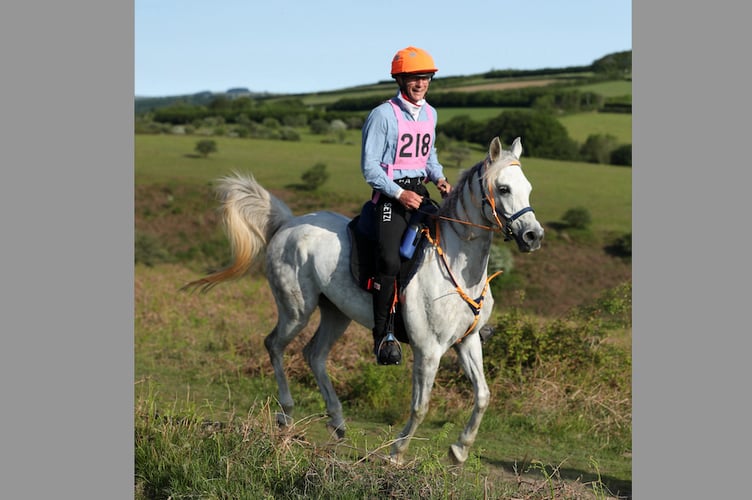
Great Britain: West Sandford rider wins iconic endurance challenge on debut appearance
Julian Johansen and his Arab gelding CF Samuel won the two-day 80km class at the Golden Horseshoe Ride. (Julian Johansen) CreditonCourier....
-
 Michael Pollard was one of the four winners of the 2025 Mongol Derby (Kathy Gabriel) Ca.News.yahoo.com - Full Article Annabel Grossman ...
 -
Inside.fei.org 17 December 2020 The FEI Board took a series of key decisions on allocation, cancellation, and reopening of bids for FEI C...
-
BNA.bh - Full Article 17 Aug 2025 London, Aug. 17 (BNA): His Highness Shaikh Nasser bin Hamad Al Khalifa, Representative of His Majes...
