Gulf News
January 3, 2010
Abu Dhabi: Teenager Abdullah Rashid Mohammad Saeed Al Naqbi, representing Abu Dhabi's W'rsan Stables, won the CEI*** 240-kilometre Shaikh Sultan Bin Zayed Al Nahyan Endurance Cup in a close three-horse finish on Saturday.
The ride was part of the Shaikh Sultan Bin Zayed Al Nahyan fourth International Festival which began on December 31. The participants were required to cover 80 km per day.
Seventeen-year-old Al Naqbi, a pupil at the Abu Dhabi School, completed the race with a time of 10 hours 16 minutes and 12 seconds, just two seconds ahead of Dubai Endurance Stables rider Saif Salem Mohammad Al Faresi.
He was once again astride the 11-year-old Anglo Arab gelding CAL Puelche.
In third place with a time of 10:16:33 seconds was Munthar Ahmad Al Baloushi from Al Reef Stables.
"It was a fantastic ride and from the penultimate day onwards I was confident that I would win," said Al Naqbi.
"It was not tiring and it was my best performance in my career. I have been riding horses since the age of 10 and I have won many prizes."
Uruguay's Eduardo Saravia Herrara, riding for the Al Ain Endurance Stables, topped the 120-kilometre event which also finished yesterday. Herrara completed the course in a time of 5:14.00 seconds, two minutes and eight second ahead of Rashid Saeed Al Kamda from the Al Kamada Stables.
Al Ain Endurance Stables rider Nawaz Zafar Nawaz Shah took third place in a time of 5:16.30 seconds.
The Junior & Young Riders CEI certified ride over 120-kilometres was won by Ahmad Saeed Mohammad Al Faresi astride the 12-year-old Anglo Arab chestnut Fenwick Cadenza. Al Faresi clocked 4:41.01 seconds for the distance.
Guest of honour American Ambassador Richard G. Olson, Jr distributed the prizes in the presence of Shaikh Hazza Bin Sultan Bin Zayed Al Nahyan and Shaikh Khalid Bin Sultan Bin Zayed Al Nahyan.
The event was hosted by the EHC in association with Emirates Equestrian Federation (EEF). It was also attended by Talib Dhaher Al Muhairi, president of EEF.
Results
Shaikh Sultan Bin Zayed Al Nahyan Endurance Cup (240km):
1. Abdullah Rashid Mohammad Saeed Al Naqbi (CAL Puelche) 10:16.12 (W'rsan Stables)
2. Saif Salem Mohammad Al Faresi (Raaward Kasmin) 10:16.14(Dubai Endurance Stables)
3. Munthar Ahmad Al Baloushi (Jibbah Enog) 10:16.33 ( Al Reef Stables)
4. Sultan Ahmad Al Baloushi (Hurst Ibn Hamed ) 10:32.34 (Al Reef Stables)
5. Saleem Rashed Bin Ghadayer (Little Joe Fox) 10:32.42 (Fazza Endurance Stables team)
Shaikh Sultan Bin Zayed Al Nahyan Endurance Cup for Private Horses (120km):
1. Eduardo Saravia Herrara (Ylmood) 5:14.00 (Al Ain Endurance Stables)
2. Rashed Saeed Al Kamda (RS Najid) 5:16.08 (Al Kamada Stables)
3. Nawaz Zafar Nawaz Shah (Bicho) 5:16.30 (Al Ain Endurance Stables)
4. Beata Dzikowska (Humo Rojo) 5:33.19 (Al Kamda Stables)
5. Khan Mohammed Kafeel Mohammed (Wattle Vale Sovreign) 5:54.52 (Al Rakna Endurance Stables)
Shaikh Sultan Bin Zayed Al Nahyan Endurance Cup for Junior and Young riders (120km):
1. Ahmad Saeed Mohammed Al Faresi (Fenwick Cadenza) 4:41.01 (Seeh Al Salaam Stables)
2. Rashed Ahmad Al Bloushi (Trojano) 4:44.03 (Al Reef Stables),
3. Ali Sakman Al Sabri (Twaf) 5:05.20 (Emaar Endurance Stables)
4. Ali Hassan Mohammed Al Marzouqi (Tim Bertop Adoins) 05:5.58 (Fazaa Endurance Team Stables)
5. Aliya Ali AL Marzouqi (Castlebar Pilot) 5.8.18 (Fazaa Endurance Team Stables.
Saturday, January 02, 2010
Thursday, December 31, 2009
Abu Dhabi: Reef Stables Take Honours
Khaleejtimes.com
(Hisham Al Gizouli)
1 January 2010
ABU DHABI - Al Reef Stables swept the first three places in the opening day of the 240km Shaikh Sultan bin Zayed International Festival Endurance Race at Bu Dheeb Endurance Village here on Thursday.
UAE rider Munzir Ahmed Al Baloushi from Al Reef Stables took the first place honours and behind him came stable-mate Yousuf Al Bloushi as Sultan Ahmed Al Bloushi took the third place honours.
The competition has attracted 103 riders from both sexes lining up for the Dh 1.5m in prizemoney.
The winner covered the 80km first phase of the ride in three hours fifteen minutes and 19 seconds to cross the finish line two seconds ahead of runner up while Sultan was 20 seconds back in third.
The competitions will resume on Friday morning at the same venue with all the riders who completed the race eligible to take part and improve their respective positions.
Meanwhile, more than fifty riders have registered for the 120km Shaikh Sultan bin Zayed Endurance Ride for privately owned horses which is set to start under the early rays of the sun at Bu Dheeb.
The race was attended by Shaikh Dr. Hazza bin Sultan bin Zayed Al Nahyan and his brother Khaled bin Sultan bin Zayed Al Nahyan.
According to the organisers, the first priority of the organising committee will be the safety of the riders and the welfare of their horses.
The organising committee has also thanked Shaikh Sultan bin Zayed Al Nahyan for his strong support and follow up which has positively reflected on the performance of the riders and the success of the event.
(Hisham Al Gizouli)
1 January 2010
ABU DHABI - Al Reef Stables swept the first three places in the opening day of the 240km Shaikh Sultan bin Zayed International Festival Endurance Race at Bu Dheeb Endurance Village here on Thursday.
UAE rider Munzir Ahmed Al Baloushi from Al Reef Stables took the first place honours and behind him came stable-mate Yousuf Al Bloushi as Sultan Ahmed Al Bloushi took the third place honours.
The competition has attracted 103 riders from both sexes lining up for the Dh 1.5m in prizemoney.
The winner covered the 80km first phase of the ride in three hours fifteen minutes and 19 seconds to cross the finish line two seconds ahead of runner up while Sultan was 20 seconds back in third.
The competitions will resume on Friday morning at the same venue with all the riders who completed the race eligible to take part and improve their respective positions.
Meanwhile, more than fifty riders have registered for the 120km Shaikh Sultan bin Zayed Endurance Ride for privately owned horses which is set to start under the early rays of the sun at Bu Dheeb.
The race was attended by Shaikh Dr. Hazza bin Sultan bin Zayed Al Nahyan and his brother Khaled bin Sultan bin Zayed Al Nahyan.
According to the organisers, the first priority of the organising committee will be the safety of the riders and the welfare of their horses.
The organising committee has also thanked Shaikh Sultan bin Zayed Al Nahyan for his strong support and follow up which has positively reflected on the performance of the riders and the success of the event.
Wednesday, December 30, 2009
Belgium: Endurance Impressions 2009

Endurance-belgium.com
30 December 2009
Belgian photographers Caroll Gatelier & Leonard Liesens have compiled some of their best endurance shots of 2009 from France, Spain, Belgium, Italy, Uruguay, Argentina, and Great Britain, in a photographic essay.
Click here for the photos and slideshow.
Leonard is also the author of "Endurance" - a book by an endurance rider, for endurance rider, available in French, and coming soon in English, Spanish, Dutch and German.
Click here for more information.
Saudi Arabia: Latifa wins second spot in Women's Endurance
MENAFN.com
(MENAFN - Arab News) Latifa Al-Sheikh of Kingdom Equestrian Team, sponsored by Prince Alwaleed bin Talal, chairman of Kingdom Holding Company, won the second place in the Women's Endurance Championship held in Dubai on Friday.
Forty-three women jockeys from the UAE, GCC and Arab world participated in the 90km challenge. Sheikh Saeed bin Hamdan bin Rashid Al-Maktoum awarded the prizes to the top three. Sheikha Asma Al-Gasmi won the event, followed by Latifa and Shamsa Al-Mutawa in that order.
Prince Alwaleed commented: "This victory is another achievement for the Saudi women in sports."
Latifa and her horse Kularu Jubal completed the course in 3:14:22, just four minutes off the winning time of Sheikha Asma.
"This achievement is with God's blessing and Prince Alwaleed's continuous support to the team and its members. I am delighted with this achievement and had traveled from Saudi Arabia confident of winning this race," she said. It was her second race in the UAE. She had also finished second in the previous race in Abu Dhabi that was won by the Spanish world champion rider Mariah Mercedes.
Latifa also thanked Sheikh Hamdan, deputy ruler of Dubai and the minister of finance and industry of the UAE, for his support for the special race for women jockeys.
She also thanked Najeeb Al-Barjes, Kingdom team manager and trainer, and other trainers, Matar and Abullah Khamees.
Latifa, who began riding at a very young age and participated in various other championships - including three in Bahrain and Qatar, said excellent weather conditions and the relatively small number of participants helped achieve high speeds in the race.
Kingdom team's series of achievements include Abdulrahman Al-Hawas winning the Al-Khalediah Prince Khaled's Cup Endurance Challenge 2009. In 2008, the team won the Alwafa International Championship Cup held in Damascus, Syria, and Saudi show jumper Khaled Al-Eid earned the highest points in the final Arab League qualifying for the World Cup Championship.
(MENAFN - Arab News) Latifa Al-Sheikh of Kingdom Equestrian Team, sponsored by Prince Alwaleed bin Talal, chairman of Kingdom Holding Company, won the second place in the Women's Endurance Championship held in Dubai on Friday.
Forty-three women jockeys from the UAE, GCC and Arab world participated in the 90km challenge. Sheikh Saeed bin Hamdan bin Rashid Al-Maktoum awarded the prizes to the top three. Sheikha Asma Al-Gasmi won the event, followed by Latifa and Shamsa Al-Mutawa in that order.
Prince Alwaleed commented: "This victory is another achievement for the Saudi women in sports."
Latifa and her horse Kularu Jubal completed the course in 3:14:22, just four minutes off the winning time of Sheikha Asma.
"This achievement is with God's blessing and Prince Alwaleed's continuous support to the team and its members. I am delighted with this achievement and had traveled from Saudi Arabia confident of winning this race," she said. It was her second race in the UAE. She had also finished second in the previous race in Abu Dhabi that was won by the Spanish world champion rider Mariah Mercedes.
Latifa also thanked Sheikh Hamdan, deputy ruler of Dubai and the minister of finance and industry of the UAE, for his support for the special race for women jockeys.
She also thanked Najeeb Al-Barjes, Kingdom team manager and trainer, and other trainers, Matar and Abullah Khamees.
Latifa, who began riding at a very young age and participated in various other championships - including three in Bahrain and Qatar, said excellent weather conditions and the relatively small number of participants helped achieve high speeds in the race.
Kingdom team's series of achievements include Abdulrahman Al-Hawas winning the Al-Khalediah Prince Khaled's Cup Endurance Challenge 2009. In 2008, the team won the Alwafa International Championship Cup held in Damascus, Syria, and Saudi show jumper Khaled Al-Eid earned the highest points in the final Arab League qualifying for the World Cup Championship.
Australia: Helen Bain
Wellington Area Trail Riding Club
Wednesday, 30 December 2009
It is with great sadness and not a little shock that we learn today of the untimely death of Helen Bain. Helen drowned on December 29 while crossing the Ruamahanga River on horseback near Masterton. Despite the heroic efforts of companions to rescue her from the river, Helen could not be revived.
Tributes to her work as a journalist have been published online in Stuff, and for her role as Communications Manager for Forest and Bird.
In the worlds of CTR and Endurance, Helen was an active member of the Wairarapa Endurance and CTR Club, a past member of WATRC, and a stalwart in the organisation of Island and National Championships events. She has done much to promote both sports by contributing pieces to various horsey magazines, and was an active and respected participant in HorseTalk forums.
Our heartfelt sympathies go to her partner, Mark, her family and friends, work colleagues, and fellow club members and competitors. We all feel her loss dearly.
Wednesday, 30 December 2009
It is with great sadness and not a little shock that we learn today of the untimely death of Helen Bain. Helen drowned on December 29 while crossing the Ruamahanga River on horseback near Masterton. Despite the heroic efforts of companions to rescue her from the river, Helen could not be revived.
Tributes to her work as a journalist have been published online in Stuff, and for her role as Communications Manager for Forest and Bird.
In the worlds of CTR and Endurance, Helen was an active member of the Wairarapa Endurance and CTR Club, a past member of WATRC, and a stalwart in the organisation of Island and National Championships events. She has done much to promote both sports by contributing pieces to various horsey magazines, and was an active and respected participant in HorseTalk forums.
Our heartfelt sympathies go to her partner, Mark, her family and friends, work colleagues, and fellow club members and competitors. We all feel her loss dearly.
Tuesday, December 29, 2009
Abu Dhabi: UAE's Asma clinches titlein 90-km endurance ride
Gulfnews.com
by M. Satya Narayan, Senior Reporter
December 26, 2009
Saudi Arabia's Latifa bags second place followed by Shamma
Abu Dhabi : Shaikha Asma Bint Taleb Al Qasimi, riding Kalkadoon Kampala, won the 90km Shaikh Hamdan Bin Rashid Al Maktoum Ladies Endurance Ride held yesterday at the Dubai International Endurance City.
The national ride, the first this season for ladies, was held under the patronage of Shaikh Hamdan Bin Rashid Al Maktoum, Deputy Ruler of Dubai and Minister of Finance, who attended yesterday's event.
Shaikh Asma completed the 90km distance in a timing of 3 hours, 8 minutes and 21 seconds at an average speed of 28.67km/h to win from 42 other lady riders who started the ride.
Four stages
Saudi Arabia's Latifa Ahmad Al Shaikh and Shamma Al Mutawa from the UAE took the second and third places respectively. Latifa completed the ride in 3:14:22 while Shamma was timed at 3:21:06 for the race run in four stages of 31km, 29km, 18km and 12 km.
Yesterday's Ladies Ride was open to riders from the UAE, GCC nations and Arab residents in the UAE.
The 100km Shaikh Hamdan Bin Rashid Al Maktoum Challenge 1, a national ride, will be held today at the same venue, also under the patronage of Shaikh Hamdan.
The ride gets off to a mass start at 6am and will be run over four loops of 32km, 29km, 27km and 12km.
by M. Satya Narayan, Senior Reporter
December 26, 2009
Saudi Arabia's Latifa bags second place followed by Shamma
Abu Dhabi : Shaikha Asma Bint Taleb Al Qasimi, riding Kalkadoon Kampala, won the 90km Shaikh Hamdan Bin Rashid Al Maktoum Ladies Endurance Ride held yesterday at the Dubai International Endurance City.
The national ride, the first this season for ladies, was held under the patronage of Shaikh Hamdan Bin Rashid Al Maktoum, Deputy Ruler of Dubai and Minister of Finance, who attended yesterday's event.
Shaikh Asma completed the 90km distance in a timing of 3 hours, 8 minutes and 21 seconds at an average speed of 28.67km/h to win from 42 other lady riders who started the ride.
Four stages
Saudi Arabia's Latifa Ahmad Al Shaikh and Shamma Al Mutawa from the UAE took the second and third places respectively. Latifa completed the ride in 3:14:22 while Shamma was timed at 3:21:06 for the race run in four stages of 31km, 29km, 18km and 12 km.
Yesterday's Ladies Ride was open to riders from the UAE, GCC nations and Arab residents in the UAE.
The 100km Shaikh Hamdan Bin Rashid Al Maktoum Challenge 1, a national ride, will be held today at the same venue, also under the patronage of Shaikh Hamdan.
The ride gets off to a mass start at 6am and will be run over four loops of 32km, 29km, 27km and 12km.
Saturday, December 26, 2009
Canada: EC Announces its Position on the FEI Clean Sport Commission
December 17, 2009 — Equine Canada strongly endorsed the Clean Sport Commission Report, presented at the International Equestrian Federation (FEI) General Assembly, held in Copenhagen at the end of November. We are pleased that the overwhelming majority of other national equestrian federations (NFs) also supported the report.
The General Assembly was similarly presented with a proposal to permit the use of strictly limited levels of a small number of specified non-steroidal anti-inflammatory drugs (NSAID) to horses in competition. Equine Canada expressed serious concerns that the proposal had been circulated to the national federations (NFs) shortly before the General Assembly, allowing no time for consultations with our veterinary advisors, equine welfare committee or disciplines. Equine Canada and a narrow majority of NFs voted in favour of the new NSAID policy, on the grounds that the underlying principles were consistent with those of the World Anti-Doping Association (WADA) position on the palliative use of non-performance enhancing NSAID treatments for human athletes.
The NSAID policy has been the subject of heated debate around the world since the General Assembly. Many NFs have expressed concerns that they had been given insufficient background information and inadequate time for consultations. The FEI President has therefore asked for the consent of the NFs to postpone the introduction of the NSAID policy until it can be discussed again at the 2010 General Assembly in Taipei, with the benefit of additional scientific analysis and time for national deliberations.
Equine Canada agrees that implementation of an FEI NSAID policy would benefit from additional research, education, and consultation. Whatever knowledge is available about the effects of implementing an NSAID policy should be documented and presented to all NFs, so that the best possible program can be structured to protect the health and welfare of our equine athletes.
As a result, Equine Canada supports the FEI President’s request to delay the adoption of the NSAID policy until it can be discussed at the 2010 General Assembly, with all of the relevant facts and research presented to the NFs for their review well before the meeting.
About Equine Canada
Equine Canada is Canada’s national governing body for equestrianism. A member-driven, charitable institution, it is the executive branch of the Canadian Equestrian Team, and the national authority for equestrian competition; the national voice for recreational riders; and the national association for equine welfare, breeding, and industry. Equine Canada is recognized by the Government of Canada, the International Equestrian Federation (FEI), and the Canadian Olympic Committee as the national organization representing equestrian sport and equine interests. For more information about Equine Canada, please visit www.equinecanada.ca.
The General Assembly was similarly presented with a proposal to permit the use of strictly limited levels of a small number of specified non-steroidal anti-inflammatory drugs (NSAID) to horses in competition. Equine Canada expressed serious concerns that the proposal had been circulated to the national federations (NFs) shortly before the General Assembly, allowing no time for consultations with our veterinary advisors, equine welfare committee or disciplines. Equine Canada and a narrow majority of NFs voted in favour of the new NSAID policy, on the grounds that the underlying principles were consistent with those of the World Anti-Doping Association (WADA) position on the palliative use of non-performance enhancing NSAID treatments for human athletes.
The NSAID policy has been the subject of heated debate around the world since the General Assembly. Many NFs have expressed concerns that they had been given insufficient background information and inadequate time for consultations. The FEI President has therefore asked for the consent of the NFs to postpone the introduction of the NSAID policy until it can be discussed again at the 2010 General Assembly in Taipei, with the benefit of additional scientific analysis and time for national deliberations.
Equine Canada agrees that implementation of an FEI NSAID policy would benefit from additional research, education, and consultation. Whatever knowledge is available about the effects of implementing an NSAID policy should be documented and presented to all NFs, so that the best possible program can be structured to protect the health and welfare of our equine athletes.
As a result, Equine Canada supports the FEI President’s request to delay the adoption of the NSAID policy until it can be discussed at the 2010 General Assembly, with all of the relevant facts and research presented to the NFs for their review well before the meeting.
About Equine Canada
Equine Canada is Canada’s national governing body for equestrianism. A member-driven, charitable institution, it is the executive branch of the Canadian Equestrian Team, and the national authority for equestrian competition; the national voice for recreational riders; and the national association for equine welfare, breeding, and industry. Equine Canada is recognized by the Government of Canada, the International Equestrian Federation (FEI), and the Canadian Olympic Committee as the national organization representing equestrian sport and equine interests. For more information about Equine Canada, please visit www.equinecanada.ca.
Thursday, December 24, 2009
Mongolia: Mongol Derby Winner secretly paid to ride
The Long Riders Guild
British Racing Association voices views over "Impossible Situation"
London Newspaper reports rise of "Chav Adventure" holidays
He was the only Mongolian rider in the Mongol Derby and, according to the original press reports, he won. Yet in an exclusive interview with the Long Riders' Guild, the winner revealed that, unlike the other contestants, he had not been asked to pay a large fee to ride. In fact, the organizers of the race had secretly hired him to participate, so as to offset claims that the Mongol Derby was an act of equestrian colonialism.
It was supposed to be a get-rich-quick pony picnic, one which saw affluent foreigners paying to risk their lives in Mongolia in an equestrian endurance race allegedly based upon the mounted accomplishments of Genghis Khan’s relay riders.
Instead the Mongol Derby became a battleground over equestrian ethics, with an unprecedented international protest being raised about the welfare of the horses, the last minute financial involvement of a discredited foreign ruler and now the revelation that the race organizers secretly paid the only Mongolian rider to participate and - according to him - then robbed him of his victory.
The company behind the event, the Adventurists, recently circulated a press release wherein they posed the question, "I hope this email finds you revving up for a weekend of adventuring anarchy, drunken debauchery and general misdemeanours." While the party may still be raging, what the company directors weren't talking about was Shiravsamboo Galbadrakh, the Mongolian they had paid to ride in the debatable Derby.
Previous to the Race
The lead-up to the dubious event was cloaked in controversy. In November, 2008 the Long Riders' Guild received an unsolicited email from the spokeswoman of the Bristol based tourism company. The Adventurists were seeking input from the LRG regarding a 1,000 kilometer endurance race. Because the company had no previous equestrian experience, and bragged about putting their clients' lives at risk, Long Riders with extensive Mongolian travel experience urged the company to proceed cautiously.
As more facts were revealed about the race’s poor planning, more than 3,000 people from 30 countries signed an on-line protest which asked the president of Mongolia to investigate the race. International endurance riders launched a "Stop the Mongol Derby" Facebook page and several contestants carried orange ribbons in solidarity with the Mongolians at the famous Tevis Cup endurance race. Meanwhile, questions from a coalition of equestrian and exploration editors, as well as reporters and bloggers, prompted the spokeswoman for the Adventurists to urge the foreign contestants to avoid discussing the race prior to its onset.
Equestrians had cause to be worried, as the Mongol Derby website had originally bragged about the life and death situations the riders would be exposed to. Wolves were jokingly mentioned. A lack of water for horse and rider was revealed. One contestant reported, "There is no marked course, no roads or tracks, we must find our own water and depend on the hospitality of the nomadic people we encounter along the way for food and shelter in their gers (Mongolian tents)."
As the debate continued and the outrage grew, the tone of the race organizers became more muted. They instituted a weight limit on the foreign riders and according to their website revised the route so as to “increase the number of water sources.” Yet the primary concern remained how the 800 horses would be cared for?
Initially the Adventurists, and their charity allies at the Mercy Corps, told the press that all equine medical needs were being met by "a British vet with 32 years experience." Additionally, the company claimed they had secured the services of Vet Net. Yet a spokesman for the American based NGO decried the claim, saying that organization was not involved because of "ethical, moral and humanitarian concerns."
With the question of equine welfare still unresolved, the tour company found an unlikely last minute ally.
FEI to the Rescue
Despite the growing scandal, the Federation Equestre Internationale (FEI) maintained a stony silence regarding the ethical questions associated with the event. After the FEI repeatedly refused calls from reporters, Geoff Young, the publisher of Horse Connection magazine, issued an editorial entitled "The Emperor Has No Riding Breeches," in which he called for the Geneva based organization to be disbanded.
Shortly afterwards the Long Riders' Guild received an unsolicited phone call from FEI Endurance Director Ian Williams. He rang to say he was flying to England to meet with the Adventurists.
According to Williams, he and "the president," had been working behind the scenes, wherein they had carried out secret talks with officials of the Mongolian government and FEI officials from Section 8, which oversees Mongolia.
Williams' statement overlooked the fact that on five separate occasions FEI officials announced to the Guild and the press that the organization could not oversee the race, nor even issue a statement expressing concern over the welfare of the 800 horses, because a) Mongolia had been suspended for not paying its FEI dues and b) the 1,000 kilometre race violated the 160 kilometre FEI limit.
When asked to clarify his employer's change of views, Williams responded a few days later by saying he was going to England so as to deliver an offer, not from the FEI, but from the government of the UAE. This is the country ruled by Sheik Mohammad Maktoum, a devoted endurance racer and husband to FEI President, HRH Princess Haya.
When hearing of this decision, an international endurance racer said, "In this case the FEI has proved that they'll pay you to violate their own rules."
Dubious Allies
Many of the aspects related to the Mongol Derby remain shrouded in secrecy. The route, for example, was not revealed except to the contestants, so as to prohibit outside observers from monitoring the health of the horses. Likewise the financial roots of the event remain a mystery. It has never been revealed how much money the UAE government provided to the Adventurists, nor what the terms of the clandestine deal were. The only thing publicly discussed was that four foreign vets would be provided, at UAE expense, so as to take care of the horses. Only one of those vets has ever been named or come forward.
Questions about the Mongol Derby, and its links to the UAE government, were heightened by a string of endurance racing events involving Sheik Maktoum.
The UAE government was revealed to be the financial benefactor on Thursday, 21st July. On Friday 22nd July, the British press reported that a 120km "private" endurance ride with an unprecedented prize-pot of Pounds 175,000 was causing consternation among UK riders. According to unconfirmed reports, the ride had been arranged so as to allow Sheikh Maktoum to continue to compete, despite the fact that he had been suspended from competition by the FEI while a doping enquiry was investigated.
The following weekend, Saturday, August 2nd, Sheik Maktoum won the English race. His son, the crown prince, came in second. On Monday, August 4th, after finding him guilty of doping his horse, the FEI banned the sheik from endurance racing for six months. Ten days later, the crown prince was also struck off the endurance racing roles for six months, after he too was convicted of cheating and doping his horse.
The Race
During the lead up to the race, there had been questions raised about how Mongolia was being used to foster a new type of equestrian colonialism.
One critic of Mercy Corps, the charity which accepted money from the contestants, raised this point. "I'm so fed up with the notion that bad behavior in foreign countries is made acceptable because you donate money to a charity. Isn't it rather like buying an indulgence?"
As if to off-set this specific criticism, three days before the race was due to begin the name of a Mongolian was suddenly listed as being a contestant. Unlike the twenty-five foreign riders, no hint was offered as to who this person was, what his equestrian experience consisted of, nor how he had managed to raise the large sum of money required of the other contestants.
Only the name of the final contestant was presented to the public.
Why?
Only the Adventurists knew.
Thus, in the midst of this final obscurity, the Mongol Derby started on August 22.
Almost immediately two riders suffered serious falls and had to withdraw because of concussion and back injuries. By the second day Charles Van Wyk from South Africa and the mysterious Mongolian were said to be “streaking ahead” of the other competitors. As the race progressed the Mongolian was reported to be in the lead.
On August 29th the Adventurists website reported, "First across the line was the Mongolian Rider, followed only one minute later by the South African, Charles Van Wyk." The international press followed suit, naming the Mongolian rider as the winner. Yet six days later the Adventurists retracted that statement, stating that "joint first was awarded to Charles van Wyk of South Africa and Shiravsamboo Galbadrakh of Mongolia."
Though the entire equestrian world, both supporters and detractors, had been watching events from afar, no photos have ever been made available showing which rider was actually first across the finish line. Instead the Mongolian was brushed back off the stage, while the professional endurance rider from South Africa basked in glory.
Yet who was this unknown, untraceable Mongolian who took the lead, won the race, and was just as quickly forgotten?
It took Mongolia’s first Long Rider to find the answers.
In the Name of Genghis Khan
According to the only named veterinarian, the world's primary concern about the safety of the nearly one thousand horses seemed to have been alleviated, as no major equine injuries were reported. No outside neutral observer can confirm how the horses were treated or ridden, nor if any of them were hurt during the race.
However, what is known is that while the international debate about the Mongol Derby was still raging, a home-grown dispute was also underway. It was being led by a Mongolian horseman named Temuujin Zemuun.
Because Temuujin carries the original birth name of Mongolia's most famous son, later known as Genghis Khan, he believed his country's equestrian heritage had been corrupted by foreign influences. While plans proceeded for Temuujin and two others to qualify to become Long Riders by making an extended equestrian journey across the nation, the talented horseman was also busy trying to have the Mongol Derby stopped.
Prior to his departure on his own journey, Temuujin called a press conference in the nation's capital, Ulaanbaator. This allowed international criticism against the race to be voiced for the first time to the Mongolian people via local television and newspapers in the native language. Then, accompanied by Buddhist monks and his fellow Long Riders, Temuujin delivered the international petition to the Mongolian president. Yet, with his own ride pressing, and the Mongol Derby still scheduled to begin, Temuujin set off to ride across Mongolia as planned.
It was upon his return that Mongolia's first Long Rider determined to find the Mongolian winner of the infamous race.
The Winner Speaks
Mongolia is the size of Texas, so finding one nomadic herder wasn't going to be easy. Yet modern technology has made remarkable inroads. After repeated attempts, Temuujin managed to obtain the location of the camp of Shiravsamboo Galbadrakh. His first attempt to find the winner failed, as it transpired the man who had won Mongolia's longest horse race was a simple herder who was now tending his animals out on the trackless steppes. Refusing to give up, Temuujin made a second journey, this time through a snow storm.
At a ger/yurt deep in the countryside, with winter pressing in, Temuujin the Long Rider met Shiravsamboo the Mongol Derby winner. In an on-the-record, filmed interview, Temuujin asked his fellow Mongolian equestrian to explain to the world his background, as well as his sudden appearance in the horse.
In response to questions Shiravsamboo revealed these facts.
Shiravsamboo Gulbadrakh is twenty-six years old.
He is unmarried and has no children.
He is a poor, illiterate Mongolian shepherd who does not speak English or any other foreign language. Because of this none of the foreign contestants could speak to him or learn the nature of his involvement in the Mongol Derby.
He was informed of the race three days prior to its start.
He was deliberately recruited by agents of the Adventurists to ride in the race, who said that it was important to the company that a Mongolian should participate.
He was not told that the foreigner contestants had paid large sums of money to participate.
He did not pay these required funds to ride in the race.
Nor did he raise the funds demanded by the charity, Mercy Corps.
He was paid 300,000 tugrugs, about $250, the same amount paid to the herder families who provided the horses, so as to ensure his participation.
Even though Temuujin had uncovered the truth, he was unable to share the news with the rest of the world immediately. He had difficulty travelling back across the snow-covered country. Once he reached the capital, he discovered that a 'flu epidemic had effectively shut down the city, making it impossible for him to find a translator straight away. It was only after overcoming all of these difficulties that the Mongolian Long Rider was able to transmit the news back to Guild HQ.
Who Won the Mongol Derby?
You would have thought that the climax to such a hotly contested race would have generated a photographic orgy. Yet the Adventurists company has never published a single photo showing the finish of the race. Instead they chose to release scenes of foreigners riding through a bucolic Mongolian landscape, as well as images depicting intent looking foreigners, who may be veterinarians, inspecting local horses.
Regardless of how much money he didn’t pay to ride, Shiravsamboo expressed his anger to Temuujin when he learned to his dismay that the organizers of the event were broadcasting the news that he had “shared” the victory with one of the foreign riders.
According to Shiravsamboo, he did not tie with Charles van Wyk. He believes 100% that he won the race without any assistance. He did not know that the Adventurists now claim that the foreign contestant tied with him. Shiravsamboo insists that he won all by himself and is adamant that he is the sole winner.
Regardless of what he believes, the Mongolian winner of the first Mongolian Derby has been quietly air-brushed aside, as the company now gives preference to the foreign contestant who took second place, and has strong commercial ties to the Barefoot Saddle company which provided free saddles to the contestants.
"South African architect Charles van Wyk, 28, was joint winner along with Mongolian rider Shiravsamboo Galbadrakh," states their website.
Did the foreign contestants know that Galbadrakh had been paid to ride alongside them? Apparently not, as one contestant noted the Mongol’s hard riding ability but remarked upon the general inability of the linguistically challenged foreigners to converse with the only Mongolian contestant.
Racing against the Rules
When contacted by the Long Riders’ Guild, company owner, Tom Morgan, and representatives of the Adventurists declined to comment on Shiravsamboo Gulbadrakh’s accusations. Yet representatives of the official British horse world had a few words to say about the unprecedented situation.
The official Mongol Derby website states.
"Forget The Epsom Derby, The Melbourne Cup, The Grand National or the St. Leger; this is the biggest, toughest and longest horse race in the world!"
The Adventurists having compared the endurance race to Great Britain’s most prestigious equestrian racing events, The Guild sought the input of the British Horse Racing Authority.
When informed of the phony jockey, the British Horse Racing Authority explained that thoroughbred races in Great Britain are strictly regulated so as to prohibit these types of actions from occurring. Thanks to the stringent rules imposed by these authorities, "there would be no way that an intermediary could supplement an entry outside the race conditions of entry."
So as to prevent deception, the BHRA explained, jockeys must be registered with Weatherbys, the administrative arm of the BHA, prior to being allowed to run in a race in England. The notion of placing a secret jockey in a race was so unheard of that the BHRA responded, "it would be impossible for us to consider the notion of a failure to disclose an entry to the public or remaining competitors."
Racecourse stewards, they said, monitor races for malpractice.
Sadly, there were no stewards in Mongolia, only a climate of corruption.
Minting Money in Mongolia
Mongolia is facing a wide variety of internal problems, all of which have endangered the last horse-based nomadic culture in the world.
Two devastating winters wiped out a third of Mongolia's livestock, forcing thousands of former nomads to scour sites which had been abandoned by large foreign mining companies, in a desperate search for crumbs of gold. Further bad weather has caused nomads to move their animals 30 times a year, instead of the average three. Meanwhile foreign companies have begun ruthlessly exploiting the country's mineral wealth, all the while the local political scene is awash with Mongolian fat-cats.
Because of these various reasons Transparency International recently gave Mongolia one of the world's worst corruption ratings. On a scale of one to ten, with one being the worst, Mongolia rates as a two.
When asked to comment on the practice of secretly paying Shiravsamboo Galbadrakh to ride in the race, and then denying his victory, the Mongolian spokeswoman for Transparency International stated, "If officials are not held accountable, why would others bother to refrain from temptation?"
The average yearly income in Mongolia is $2,100, which helps explains why a simple herder, like Shiravsamboo, would welcome a payment of $250 from the Adventurists.
Adding to Mongolia's problems is a report published 22/12/09 in London’s Independent newspaper, "2010 is set to be the year of "chav adventures" - where unruly tourists combine adventure breaks with charity raising - according to an annual travel trends report today."
Leading the rise in rowdyism will be the Adventurists, who are now set to launch an even larger Mongol Derby by placing their monetary handwriting on the Mongolian wall.
The first "Rickshaw Run" race organized by the Adventurists in 2007 charged competitors £97 to compete. The entry fee for the Rickshaw Run is now £895. The 2009 Mongol Derby was scheduled to raise $113,000 from the twenty-five foreign contestants, each of whom was required to pay $4550 in fees. Race organizers are now attempting to enlist 35 contestants for the 2010 Mongol Derby. With an estimated $332,500 in contestant fees alone, and with an estimated fee of only $1750 being paid to the Mongolian herders who will supply the horses, it looks to be another profitable venture for the Adventurists.
But not to worry.
The official Mongol Derby website states.
"To get a place on the world's toughest horse race it will set you back $9500 (about £6000). But remember if you put some hard graft into sponsorship you could well find the Mongol Derby doesn't need to cost you anything."
The Mongol Derby represents a callous calculated disregard for the accepted rules of endurance riding which has undermined the strength of the sport and endangered nearly 1,000 horses so as to glorify the ego of man. The LRG became involved in the Mongol Derby because The Guild was initially contacted by the Adventurists. Having made every attempt to defend the horses, and thanks to Mongolian Long Rider Temuujin's efforts to reveal the truth, The Guild now considers the matter closed. The LRG would also like to thank Long Riders Tim Cope, Bonnie Folkins, Batmonkh Muntuush, Ian Robinson and Catherine Waridel.
To see photographs associated with this email, including Long Rider Temuujin's meeting with Mongol Derby winner Shiravsamboo, click here: http://www.thelongridersguild.com/mongol-derby-end.htm
British Racing Association voices views over "Impossible Situation"
London Newspaper reports rise of "Chav Adventure" holidays
He was the only Mongolian rider in the Mongol Derby and, according to the original press reports, he won. Yet in an exclusive interview with the Long Riders' Guild, the winner revealed that, unlike the other contestants, he had not been asked to pay a large fee to ride. In fact, the organizers of the race had secretly hired him to participate, so as to offset claims that the Mongol Derby was an act of equestrian colonialism.
It was supposed to be a get-rich-quick pony picnic, one which saw affluent foreigners paying to risk their lives in Mongolia in an equestrian endurance race allegedly based upon the mounted accomplishments of Genghis Khan’s relay riders.
Instead the Mongol Derby became a battleground over equestrian ethics, with an unprecedented international protest being raised about the welfare of the horses, the last minute financial involvement of a discredited foreign ruler and now the revelation that the race organizers secretly paid the only Mongolian rider to participate and - according to him - then robbed him of his victory.
The company behind the event, the Adventurists, recently circulated a press release wherein they posed the question, "I hope this email finds you revving up for a weekend of adventuring anarchy, drunken debauchery and general misdemeanours." While the party may still be raging, what the company directors weren't talking about was Shiravsamboo Galbadrakh, the Mongolian they had paid to ride in the debatable Derby.
Previous to the Race
The lead-up to the dubious event was cloaked in controversy. In November, 2008 the Long Riders' Guild received an unsolicited email from the spokeswoman of the Bristol based tourism company. The Adventurists were seeking input from the LRG regarding a 1,000 kilometer endurance race. Because the company had no previous equestrian experience, and bragged about putting their clients' lives at risk, Long Riders with extensive Mongolian travel experience urged the company to proceed cautiously.
As more facts were revealed about the race’s poor planning, more than 3,000 people from 30 countries signed an on-line protest which asked the president of Mongolia to investigate the race. International endurance riders launched a "Stop the Mongol Derby" Facebook page and several contestants carried orange ribbons in solidarity with the Mongolians at the famous Tevis Cup endurance race. Meanwhile, questions from a coalition of equestrian and exploration editors, as well as reporters and bloggers, prompted the spokeswoman for the Adventurists to urge the foreign contestants to avoid discussing the race prior to its onset.
Equestrians had cause to be worried, as the Mongol Derby website had originally bragged about the life and death situations the riders would be exposed to. Wolves were jokingly mentioned. A lack of water for horse and rider was revealed. One contestant reported, "There is no marked course, no roads or tracks, we must find our own water and depend on the hospitality of the nomadic people we encounter along the way for food and shelter in their gers (Mongolian tents)."
As the debate continued and the outrage grew, the tone of the race organizers became more muted. They instituted a weight limit on the foreign riders and according to their website revised the route so as to “increase the number of water sources.” Yet the primary concern remained how the 800 horses would be cared for?
Initially the Adventurists, and their charity allies at the Mercy Corps, told the press that all equine medical needs were being met by "a British vet with 32 years experience." Additionally, the company claimed they had secured the services of Vet Net. Yet a spokesman for the American based NGO decried the claim, saying that organization was not involved because of "ethical, moral and humanitarian concerns."
With the question of equine welfare still unresolved, the tour company found an unlikely last minute ally.
FEI to the Rescue
Despite the growing scandal, the Federation Equestre Internationale (FEI) maintained a stony silence regarding the ethical questions associated with the event. After the FEI repeatedly refused calls from reporters, Geoff Young, the publisher of Horse Connection magazine, issued an editorial entitled "The Emperor Has No Riding Breeches," in which he called for the Geneva based organization to be disbanded.
Shortly afterwards the Long Riders' Guild received an unsolicited phone call from FEI Endurance Director Ian Williams. He rang to say he was flying to England to meet with the Adventurists.
According to Williams, he and "the president," had been working behind the scenes, wherein they had carried out secret talks with officials of the Mongolian government and FEI officials from Section 8, which oversees Mongolia.
Williams' statement overlooked the fact that on five separate occasions FEI officials announced to the Guild and the press that the organization could not oversee the race, nor even issue a statement expressing concern over the welfare of the 800 horses, because a) Mongolia had been suspended for not paying its FEI dues and b) the 1,000 kilometre race violated the 160 kilometre FEI limit.
When asked to clarify his employer's change of views, Williams responded a few days later by saying he was going to England so as to deliver an offer, not from the FEI, but from the government of the UAE. This is the country ruled by Sheik Mohammad Maktoum, a devoted endurance racer and husband to FEI President, HRH Princess Haya.
When hearing of this decision, an international endurance racer said, "In this case the FEI has proved that they'll pay you to violate their own rules."
Dubious Allies
Many of the aspects related to the Mongol Derby remain shrouded in secrecy. The route, for example, was not revealed except to the contestants, so as to prohibit outside observers from monitoring the health of the horses. Likewise the financial roots of the event remain a mystery. It has never been revealed how much money the UAE government provided to the Adventurists, nor what the terms of the clandestine deal were. The only thing publicly discussed was that four foreign vets would be provided, at UAE expense, so as to take care of the horses. Only one of those vets has ever been named or come forward.
Questions about the Mongol Derby, and its links to the UAE government, were heightened by a string of endurance racing events involving Sheik Maktoum.
The UAE government was revealed to be the financial benefactor on Thursday, 21st July. On Friday 22nd July, the British press reported that a 120km "private" endurance ride with an unprecedented prize-pot of Pounds 175,000 was causing consternation among UK riders. According to unconfirmed reports, the ride had been arranged so as to allow Sheikh Maktoum to continue to compete, despite the fact that he had been suspended from competition by the FEI while a doping enquiry was investigated.
The following weekend, Saturday, August 2nd, Sheik Maktoum won the English race. His son, the crown prince, came in second. On Monday, August 4th, after finding him guilty of doping his horse, the FEI banned the sheik from endurance racing for six months. Ten days later, the crown prince was also struck off the endurance racing roles for six months, after he too was convicted of cheating and doping his horse.
The Race
During the lead up to the race, there had been questions raised about how Mongolia was being used to foster a new type of equestrian colonialism.
One critic of Mercy Corps, the charity which accepted money from the contestants, raised this point. "I'm so fed up with the notion that bad behavior in foreign countries is made acceptable because you donate money to a charity. Isn't it rather like buying an indulgence?"
As if to off-set this specific criticism, three days before the race was due to begin the name of a Mongolian was suddenly listed as being a contestant. Unlike the twenty-five foreign riders, no hint was offered as to who this person was, what his equestrian experience consisted of, nor how he had managed to raise the large sum of money required of the other contestants.
Only the name of the final contestant was presented to the public.
Why?
Only the Adventurists knew.
Thus, in the midst of this final obscurity, the Mongol Derby started on August 22.
Almost immediately two riders suffered serious falls and had to withdraw because of concussion and back injuries. By the second day Charles Van Wyk from South Africa and the mysterious Mongolian were said to be “streaking ahead” of the other competitors. As the race progressed the Mongolian was reported to be in the lead.
On August 29th the Adventurists website reported, "First across the line was the Mongolian Rider, followed only one minute later by the South African, Charles Van Wyk." The international press followed suit, naming the Mongolian rider as the winner. Yet six days later the Adventurists retracted that statement, stating that "joint first was awarded to Charles van Wyk of South Africa and Shiravsamboo Galbadrakh of Mongolia."
Though the entire equestrian world, both supporters and detractors, had been watching events from afar, no photos have ever been made available showing which rider was actually first across the finish line. Instead the Mongolian was brushed back off the stage, while the professional endurance rider from South Africa basked in glory.
Yet who was this unknown, untraceable Mongolian who took the lead, won the race, and was just as quickly forgotten?
It took Mongolia’s first Long Rider to find the answers.
In the Name of Genghis Khan
According to the only named veterinarian, the world's primary concern about the safety of the nearly one thousand horses seemed to have been alleviated, as no major equine injuries were reported. No outside neutral observer can confirm how the horses were treated or ridden, nor if any of them were hurt during the race.
However, what is known is that while the international debate about the Mongol Derby was still raging, a home-grown dispute was also underway. It was being led by a Mongolian horseman named Temuujin Zemuun.
Because Temuujin carries the original birth name of Mongolia's most famous son, later known as Genghis Khan, he believed his country's equestrian heritage had been corrupted by foreign influences. While plans proceeded for Temuujin and two others to qualify to become Long Riders by making an extended equestrian journey across the nation, the talented horseman was also busy trying to have the Mongol Derby stopped.
Prior to his departure on his own journey, Temuujin called a press conference in the nation's capital, Ulaanbaator. This allowed international criticism against the race to be voiced for the first time to the Mongolian people via local television and newspapers in the native language. Then, accompanied by Buddhist monks and his fellow Long Riders, Temuujin delivered the international petition to the Mongolian president. Yet, with his own ride pressing, and the Mongol Derby still scheduled to begin, Temuujin set off to ride across Mongolia as planned.
It was upon his return that Mongolia's first Long Rider determined to find the Mongolian winner of the infamous race.
The Winner Speaks
Mongolia is the size of Texas, so finding one nomadic herder wasn't going to be easy. Yet modern technology has made remarkable inroads. After repeated attempts, Temuujin managed to obtain the location of the camp of Shiravsamboo Galbadrakh. His first attempt to find the winner failed, as it transpired the man who had won Mongolia's longest horse race was a simple herder who was now tending his animals out on the trackless steppes. Refusing to give up, Temuujin made a second journey, this time through a snow storm.
At a ger/yurt deep in the countryside, with winter pressing in, Temuujin the Long Rider met Shiravsamboo the Mongol Derby winner. In an on-the-record, filmed interview, Temuujin asked his fellow Mongolian equestrian to explain to the world his background, as well as his sudden appearance in the horse.
In response to questions Shiravsamboo revealed these facts.
Shiravsamboo Gulbadrakh is twenty-six years old.
He is unmarried and has no children.
He is a poor, illiterate Mongolian shepherd who does not speak English or any other foreign language. Because of this none of the foreign contestants could speak to him or learn the nature of his involvement in the Mongol Derby.
He was informed of the race three days prior to its start.
He was deliberately recruited by agents of the Adventurists to ride in the race, who said that it was important to the company that a Mongolian should participate.
He was not told that the foreigner contestants had paid large sums of money to participate.
He did not pay these required funds to ride in the race.
Nor did he raise the funds demanded by the charity, Mercy Corps.
He was paid 300,000 tugrugs, about $250, the same amount paid to the herder families who provided the horses, so as to ensure his participation.
Even though Temuujin had uncovered the truth, he was unable to share the news with the rest of the world immediately. He had difficulty travelling back across the snow-covered country. Once he reached the capital, he discovered that a 'flu epidemic had effectively shut down the city, making it impossible for him to find a translator straight away. It was only after overcoming all of these difficulties that the Mongolian Long Rider was able to transmit the news back to Guild HQ.
Who Won the Mongol Derby?
You would have thought that the climax to such a hotly contested race would have generated a photographic orgy. Yet the Adventurists company has never published a single photo showing the finish of the race. Instead they chose to release scenes of foreigners riding through a bucolic Mongolian landscape, as well as images depicting intent looking foreigners, who may be veterinarians, inspecting local horses.
Regardless of how much money he didn’t pay to ride, Shiravsamboo expressed his anger to Temuujin when he learned to his dismay that the organizers of the event were broadcasting the news that he had “shared” the victory with one of the foreign riders.
According to Shiravsamboo, he did not tie with Charles van Wyk. He believes 100% that he won the race without any assistance. He did not know that the Adventurists now claim that the foreign contestant tied with him. Shiravsamboo insists that he won all by himself and is adamant that he is the sole winner.
Regardless of what he believes, the Mongolian winner of the first Mongolian Derby has been quietly air-brushed aside, as the company now gives preference to the foreign contestant who took second place, and has strong commercial ties to the Barefoot Saddle company which provided free saddles to the contestants.
"South African architect Charles van Wyk, 28, was joint winner along with Mongolian rider Shiravsamboo Galbadrakh," states their website.
Did the foreign contestants know that Galbadrakh had been paid to ride alongside them? Apparently not, as one contestant noted the Mongol’s hard riding ability but remarked upon the general inability of the linguistically challenged foreigners to converse with the only Mongolian contestant.
Racing against the Rules
When contacted by the Long Riders’ Guild, company owner, Tom Morgan, and representatives of the Adventurists declined to comment on Shiravsamboo Gulbadrakh’s accusations. Yet representatives of the official British horse world had a few words to say about the unprecedented situation.
The official Mongol Derby website states.
"Forget The Epsom Derby, The Melbourne Cup, The Grand National or the St. Leger; this is the biggest, toughest and longest horse race in the world!"
The Adventurists having compared the endurance race to Great Britain’s most prestigious equestrian racing events, The Guild sought the input of the British Horse Racing Authority.
When informed of the phony jockey, the British Horse Racing Authority explained that thoroughbred races in Great Britain are strictly regulated so as to prohibit these types of actions from occurring. Thanks to the stringent rules imposed by these authorities, "there would be no way that an intermediary could supplement an entry outside the race conditions of entry."
So as to prevent deception, the BHRA explained, jockeys must be registered with Weatherbys, the administrative arm of the BHA, prior to being allowed to run in a race in England. The notion of placing a secret jockey in a race was so unheard of that the BHRA responded, "it would be impossible for us to consider the notion of a failure to disclose an entry to the public or remaining competitors."
Racecourse stewards, they said, monitor races for malpractice.
Sadly, there were no stewards in Mongolia, only a climate of corruption.
Minting Money in Mongolia
Mongolia is facing a wide variety of internal problems, all of which have endangered the last horse-based nomadic culture in the world.
Two devastating winters wiped out a third of Mongolia's livestock, forcing thousands of former nomads to scour sites which had been abandoned by large foreign mining companies, in a desperate search for crumbs of gold. Further bad weather has caused nomads to move their animals 30 times a year, instead of the average three. Meanwhile foreign companies have begun ruthlessly exploiting the country's mineral wealth, all the while the local political scene is awash with Mongolian fat-cats.
Because of these various reasons Transparency International recently gave Mongolia one of the world's worst corruption ratings. On a scale of one to ten, with one being the worst, Mongolia rates as a two.
When asked to comment on the practice of secretly paying Shiravsamboo Galbadrakh to ride in the race, and then denying his victory, the Mongolian spokeswoman for Transparency International stated, "If officials are not held accountable, why would others bother to refrain from temptation?"
The average yearly income in Mongolia is $2,100, which helps explains why a simple herder, like Shiravsamboo, would welcome a payment of $250 from the Adventurists.
Adding to Mongolia's problems is a report published 22/12/09 in London’s Independent newspaper, "2010 is set to be the year of "chav adventures" - where unruly tourists combine adventure breaks with charity raising - according to an annual travel trends report today."
Leading the rise in rowdyism will be the Adventurists, who are now set to launch an even larger Mongol Derby by placing their monetary handwriting on the Mongolian wall.
The first "Rickshaw Run" race organized by the Adventurists in 2007 charged competitors £97 to compete. The entry fee for the Rickshaw Run is now £895. The 2009 Mongol Derby was scheduled to raise $113,000 from the twenty-five foreign contestants, each of whom was required to pay $4550 in fees. Race organizers are now attempting to enlist 35 contestants for the 2010 Mongol Derby. With an estimated $332,500 in contestant fees alone, and with an estimated fee of only $1750 being paid to the Mongolian herders who will supply the horses, it looks to be another profitable venture for the Adventurists.
But not to worry.
The official Mongol Derby website states.
"To get a place on the world's toughest horse race it will set you back $9500 (about £6000). But remember if you put some hard graft into sponsorship you could well find the Mongol Derby doesn't need to cost you anything."
The Mongol Derby represents a callous calculated disregard for the accepted rules of endurance riding which has undermined the strength of the sport and endangered nearly 1,000 horses so as to glorify the ego of man. The LRG became involved in the Mongol Derby because The Guild was initially contacted by the Adventurists. Having made every attempt to defend the horses, and thanks to Mongolian Long Rider Temuujin's efforts to reveal the truth, The Guild now considers the matter closed. The LRG would also like to thank Long Riders Tim Cope, Bonnie Folkins, Batmonkh Muntuush, Ian Robinson and Catherine Waridel.
To see photographs associated with this email, including Long Rider Temuujin's meeting with Mongol Derby winner Shiravsamboo, click here: http://www.thelongridersguild.com/mongol-derby-end.htm
India: Dundlod Rajasthan

Skayinbandhavgarh.blogspot.com - Story and Photos
After spending two days in Jaipur we moved to Dundlod. Dundlod is a small town in Jhunjhnu district about 170 km from Jaipur. Road is good not unlike other states where after 5 hours of road journey tourists look for the bed and painkiller tablet. We stayed in Dundlod Fort as a guest of Kr Raghuvendra singh ji who runs horse safaris at Dundlod. He is a pioneer in adding this adventure in tourism itinerary successfully. Today it has became one of the major tourism adventure sport in Rajasthan. I am not sure whether this is recognised as an adventure sport or not!
We were there on invitation to photograph the International Invitational 81 Km Endurance organised by Indigenous Horse Society of India with collaboration of Rajasthan Equestrian Association. This was the first Equestrian Federation of India's qualifying race at Dundlod. Two Endurance were organised one 40 Km and second 81 Km Endurance in which major International teams participated.
More...
Kentucky Horse Park to host Arabian horse art exhibition in 2010
Examiner.com - Full Article
December 15, 2009 | Equestrian Examiner | Linda Ann Nickerson
Beginning in May 2010, the Kentucky Horse Park (in Lexington, Kentucky) will feature a major Arabian horse art exhibition, with sponsorship by the Saudi Arabian Equestrian Federation.
The 9,000-square-foot exhibition, titled "A Gift from the Desert: The Art, History and Culture of the Arabian Horse," will include more than 300 artifacts and artworks representing collections from the Near East, Europe and America. Among these items will be the Standard of Ur (a 4,000-year-old equestrian driving artifact) and the Kikkuli Tablet (an ancient Hittite horse care manual).
A Gift from the Desert will focus on the important impact of equines on Near Eastern civilization, looking at development of the Arabian horse in particular.
More...
December 15, 2009 | Equestrian Examiner | Linda Ann Nickerson
Beginning in May 2010, the Kentucky Horse Park (in Lexington, Kentucky) will feature a major Arabian horse art exhibition, with sponsorship by the Saudi Arabian Equestrian Federation.
The 9,000-square-foot exhibition, titled "A Gift from the Desert: The Art, History and Culture of the Arabian Horse," will include more than 300 artifacts and artworks representing collections from the Near East, Europe and America. Among these items will be the Standard of Ur (a 4,000-year-old equestrian driving artifact) and the Kikkuli Tablet (an ancient Hittite horse care manual).
A Gift from the Desert will focus on the important impact of equines on Near Eastern civilization, looking at development of the Arabian horse in particular.
More...
Tuesday, December 22, 2009
Chile: Last 2009 race of the Enduro Equestrian in Santo Domingo
The final 2009 endurance ride of Endurance Ecuestre was held on December 19 2009 in Santo Domingo, Chile.
Alicia Gonzalez, riding Pinta, won the 160 km ride in the time of 11:36.27; Hans Buckel riding Satanas won the 120 km in the time of 8:30.57; and Lucas Buckel riding Turbante won the Junior 120 km in the time of 8:00.18.
Read the Press Release
Asociacion Chilena de Enduro Ecuestre
Monday, December 21, 2009
India: Arosha completes 81km horse race
DailyMirror
Tuesday, December 22, 2009
Rider Arosha Jayasundara completed the 81km with her horse, cantering across the finish line at the end of a 9 hour ride in good condition as dawn and dust met in the cold Rajastani desert of India at the second consecutive International Invitational 81km Endurance National Indigenous Horse Show Championship organised by the Marwari Indigenous Horse Society of India, on December 12.
Riders Arosha Jayasundara, Suranjith Premadasa and Prameesha Abeysekera, participating on borrowed Marwari horses from the Dundlod Stables of Ragvendra Singh Dundlod, represented Sri Lanka at this FEI qualifier.
Prameesha led the team at the beginning with the condition of her horse Suki till the 60 km Vet Gate where she did not qualify to continue.
Suranjith on his horse Anjalie completed the first leg of the race at 20.25km before being withdrawn due to missing the time restriction at Vet Gate.
The culminating race of this 6-day event, the International invitational drew representatives from India, Sri Lanka, America, United Kingdom, France, Italy and Russia to line up at the start line in a test of endurance and skill at this One Star FEI (Federation International Equestre) event.
The 81 km was split into 4 parts with the horses being checked by veterinarians every 20.25km.
The horse’s condition, stamina and heart rate are examined before being allowed to continue with the race placing a great importance on the care and condition of the horse during the event.
The Sri Lanka Equestrian Association proudly to acknowledge the efforts of the riders and thanked the organisers and sponsors at this event for helping these riders take Sri Lanka to the international equestrian stage.
[More ...]
Tuesday, December 22, 2009
Rider Arosha Jayasundara completed the 81km with her horse, cantering across the finish line at the end of a 9 hour ride in good condition as dawn and dust met in the cold Rajastani desert of India at the second consecutive International Invitational 81km Endurance National Indigenous Horse Show Championship organised by the Marwari Indigenous Horse Society of India, on December 12.
Riders Arosha Jayasundara, Suranjith Premadasa and Prameesha Abeysekera, participating on borrowed Marwari horses from the Dundlod Stables of Ragvendra Singh Dundlod, represented Sri Lanka at this FEI qualifier.
Prameesha led the team at the beginning with the condition of her horse Suki till the 60 km Vet Gate where she did not qualify to continue.
Suranjith on his horse Anjalie completed the first leg of the race at 20.25km before being withdrawn due to missing the time restriction at Vet Gate.
The culminating race of this 6-day event, the International invitational drew representatives from India, Sri Lanka, America, United Kingdom, France, Italy and Russia to line up at the start line in a test of endurance and skill at this One Star FEI (Federation International Equestre) event.
The 81 km was split into 4 parts with the horses being checked by veterinarians every 20.25km.
The horse’s condition, stamina and heart rate are examined before being allowed to continue with the race placing a great importance on the care and condition of the horse during the event.
The Sri Lanka Equestrian Association proudly to acknowledge the efforts of the riders and thanked the organisers and sponsors at this event for helping these riders take Sri Lanka to the international equestrian stage.
[More ...]
Sunday, December 20, 2009
Bahrain: Mirza lifts National Day endurance title
Gulf-daily-news.com
December 20, 2009
ROYAL Endurance Team rider Jaffar Mirza won the 120-kilometre National Day Endurance Ride Championship yesterday at the Bahrain International Endurance Village in Sakhir.
Riding Mexico, Mirza outlasted the 46 other participants who competed in the gruelling five-stage seniors race. Mirza clocked a winning time of five hours 38 minutes 27 seconds.
The event was organised by the Bahrain Royal Equestrian and Endurance Federation (Breef) in celebration of the kingdom's National Day and the 10th anniversary of His Majesty King Hamad's accession to the throne.
Bahrain Olympic Committee president Shaikh Nasser bin Hamad Al Khalifa and Breef president Shaikh Khalid bin Hamad Al Khalifa also took part in the ride, but both Royal Endurance Team stars were forced to pull out after the fourth stage due to injuries to their respective horses. Shaikh Nasser was riding The Destroyer while Shaikh Khalid was astride LM Bikosam.
The championship was also attended by National Guard chief Major General Shaikh Mohammed bin Isa Al Khalifa.
The seniors race saw strong competition as the riders not only had to fight against fatigue but also to tackle the difficult terrain which had been hugely affected by heavy rainfall in Bahrain in the past week.
After the race was flagged off at 6am, Mirza set the early pace and was among the leading bunch at the end of the first 30km stage which he completed in 1:19:11.
He continued his steady stride through the 30km second stage, the 25km third and the 20km penultimate leg, at the end of which he fell to third place behind new leader and fellow-Bahraini Durg Singh Bhanwar and Indian Sang Singh Bhati.
Determined
But a determined showing in the final 15km stage helped him finish strong and steal victory. He completed the last leg in 42 minutes 30 seconds - nearly 10 minutes faster than anyone else.
Bhanwar was left to settle for the runner-up spot as he finished the race with a total time of 5:45:00, which was close to eight minutes behind Mirza. Bhati was not far behind in third in 5:45:30.
Saudi Arabia's Fayez Al Turkomani finished fourth in 5:57:58 on his horse Dodge. Abdulrahman Al Zaeed, another Royal Endurance Team rider, finished fifth overall on Blythswood Akabar in 6:14:36.
Meanwhile, Al Muqheerat Stable's Nasser Ahmed Awad, riding Al Fahd, won the juniors ride in 6:03:55. Royal Endurance Team's Ahmed Adel Al Gaoud on Jassem was the runner-up in 6:20:40, while Abdulla Hilal Al Khatri on Faras Kaoma from Al Asayel Stable came third in 6:38:59.
Click here for photos by Osama Mohammed
December 20, 2009
ROYAL Endurance Team rider Jaffar Mirza won the 120-kilometre National Day Endurance Ride Championship yesterday at the Bahrain International Endurance Village in Sakhir.
Riding Mexico, Mirza outlasted the 46 other participants who competed in the gruelling five-stage seniors race. Mirza clocked a winning time of five hours 38 minutes 27 seconds.
The event was organised by the Bahrain Royal Equestrian and Endurance Federation (Breef) in celebration of the kingdom's National Day and the 10th anniversary of His Majesty King Hamad's accession to the throne.
Bahrain Olympic Committee president Shaikh Nasser bin Hamad Al Khalifa and Breef president Shaikh Khalid bin Hamad Al Khalifa also took part in the ride, but both Royal Endurance Team stars were forced to pull out after the fourth stage due to injuries to their respective horses. Shaikh Nasser was riding The Destroyer while Shaikh Khalid was astride LM Bikosam.
The championship was also attended by National Guard chief Major General Shaikh Mohammed bin Isa Al Khalifa.
The seniors race saw strong competition as the riders not only had to fight against fatigue but also to tackle the difficult terrain which had been hugely affected by heavy rainfall in Bahrain in the past week.
After the race was flagged off at 6am, Mirza set the early pace and was among the leading bunch at the end of the first 30km stage which he completed in 1:19:11.
He continued his steady stride through the 30km second stage, the 25km third and the 20km penultimate leg, at the end of which he fell to third place behind new leader and fellow-Bahraini Durg Singh Bhanwar and Indian Sang Singh Bhati.
Determined
But a determined showing in the final 15km stage helped him finish strong and steal victory. He completed the last leg in 42 minutes 30 seconds - nearly 10 minutes faster than anyone else.
Bhanwar was left to settle for the runner-up spot as he finished the race with a total time of 5:45:00, which was close to eight minutes behind Mirza. Bhati was not far behind in third in 5:45:30.
Saudi Arabia's Fayez Al Turkomani finished fourth in 5:57:58 on his horse Dodge. Abdulrahman Al Zaeed, another Royal Endurance Team rider, finished fifth overall on Blythswood Akabar in 6:14:36.
Meanwhile, Al Muqheerat Stable's Nasser Ahmed Awad, riding Al Fahd, won the juniors ride in 6:03:55. Royal Endurance Team's Ahmed Adel Al Gaoud on Jassem was the runner-up in 6:20:40, while Abdulla Hilal Al Khatri on Faras Kaoma from Al Asayel Stable came third in 6:38:59.
Click here for photos by Osama Mohammed
Saturday, December 19, 2009
Use of NSAIDs to Be Put to Vote at 2010 General Assembly
HorsesInTheSouth.com
Friday, December 18th, 2009
Lausanne (SUI), 18 December 2009 – The policy choice of whether the restricted use of a small number of non-steroidal anti-inflammatory drugs (NSAIDs) should be permitted in competition will be put to the vote at the 2010 FEI General Assembly, following a resolution passed by the Bureau today.
In line with the Bureau’s earlier decision, the present Equine Prohibited List and its accompanying Rules and Veterinary Regulations will remain in effect until 4 April 2010. As of 5 April 2010, the FEI will implement the 20 October Prohibited Substances List, a more detailed version of the present Equine Prohibited List which received no specific objections during the four-week pre-General Assembly consultation period. The new Equine Anti-Doping and Controlled Medication Regulations (EADCMRs) and revised Veterinary Regulations, which both received strong support at the General Assembly, will also be implemented on 5 April 2010.
[More ...]
Friday, December 18th, 2009
Lausanne (SUI), 18 December 2009 – The policy choice of whether the restricted use of a small number of non-steroidal anti-inflammatory drugs (NSAIDs) should be permitted in competition will be put to the vote at the 2010 FEI General Assembly, following a resolution passed by the Bureau today.
In line with the Bureau’s earlier decision, the present Equine Prohibited List and its accompanying Rules and Veterinary Regulations will remain in effect until 4 April 2010. As of 5 April 2010, the FEI will implement the 20 October Prohibited Substances List, a more detailed version of the present Equine Prohibited List which received no specific objections during the four-week pre-General Assembly consultation period. The new Equine Anti-Doping and Controlled Medication Regulations (EADCMRs) and revised Veterinary Regulations, which both received strong support at the General Assembly, will also be implemented on 5 April 2010.
[More ...]
Friday, December 18, 2009
The drugs vote that rained on the FEI's parade
Horsetalk.co.nz - Full Article
December 17, 2009
by Neil Clarkson
Special to Horsetalk.co.nz
A grey winter gloom descended over Copenhagen as delegates from member nations of the International Equestrian Federation (FEI) began arriving in November for its annual General Assembly.
The outlook was rather sunnier in the world of equestrian sport. The international governing body must have been upbeat as delegates from more than 100 nations prepared to meet at the Marriott Hotel, a large red-brick high-rise that stands beside one of the Danish capital's canals.
And why shouldn't the Lausanne-based organisation have been upbeat? Equestrian sport was poised to put the doping embarrassment of the 2008 Beijing Olympics behind it. It rightly anticipated strong support for its ground-breaking Clean Sport initiative, the result of two commissions of inquiry and an investment of some 1.8 million Euros.
Delegates were also to vote on a new streamlined structure to replace the large and, some would say, unwieldy 22-strong governing FEI Bureau, substituting it with a much leaner skills-based seven-strong team.
It had all the hallmarks of a new beginning and it seemed little would stand in its way.
More...
December 17, 2009
by Neil Clarkson
Special to Horsetalk.co.nz
A grey winter gloom descended over Copenhagen as delegates from member nations of the International Equestrian Federation (FEI) began arriving in November for its annual General Assembly.
The outlook was rather sunnier in the world of equestrian sport. The international governing body must have been upbeat as delegates from more than 100 nations prepared to meet at the Marriott Hotel, a large red-brick high-rise that stands beside one of the Danish capital's canals.
And why shouldn't the Lausanne-based organisation have been upbeat? Equestrian sport was poised to put the doping embarrassment of the 2008 Beijing Olympics behind it. It rightly anticipated strong support for its ground-breaking Clean Sport initiative, the result of two commissions of inquiry and an investment of some 1.8 million Euros.
Delegates were also to vote on a new streamlined structure to replace the large and, some would say, unwieldy 22-strong governing FEI Bureau, substituting it with a much leaner skills-based seven-strong team.
It had all the hallmarks of a new beginning and it seemed little would stand in its way.
More...
Mongol Derby 2010
December 18 2009
http://www.mongolderby.com
The world’s longest, toughest horse race, The Mongol Derby, returns for a second year
After the triumphant inaugural edition of the 2009 Mongol Derby, the epic 1000km multi-horse race across Mongolia returns for a second time in August 2010. With 35 places available and a more gruelling course being planned, this second Derby is set to be even tougher than last year.
The 2010 Derby will start on August 7 and officially end on August 18, giving riders 12 days to complete the 1000km course. Last year’s winners, Charles van Wyck (South Africa) and Shiravsamboo Galbadrakh (Mongolia) completed the course in eight days.
The 1000 km race is based on the postal system of Chinggis Khan, which could relay messages thousands of miles in a matter of days. Like the ancient postal system the Mongol Derby relies on a network of horse stations. These are being built at 40km or under intervals stretching along the course. With the rider’s changing steed at each horse station, the Derby is not a test of the horses’ speed, but of the rider’s skill and endurance.
The Mongol Derby is one of the most ambitious equestrian events on the planet with over 1000 Mongolian horses selected and trained for the event. Animal welfare is once again the top priority of the organisers. All the horses will be subject to a series of rigorous veterinary checks before, during and after the race. In 2009 less than 2% of the horses required any first aid and they were all minor.
The 35 selected riders will attend a three day pre-race training session in the Mongolian steppe before taking on the 1000km course. The session will be taken by Maggie Pattinson, Chef d'Equipe of the British Home International Endurance Team since 2007 and endurance expert extraordinnaire. The session will also include medical training from Prometheus Medical.
As with all The Adventurists’ events, the Mongol Derby is not only about having an amazing adventure, it's also about raising lots of cash for charity. Each rider will raise a minimum of £1000 so the second Derby is set to raise at least £35,000 for the official charity. The 2009 Mongol Derby raised a fantastic £71,000; £41,000 of this for Mercy Corps and a further £30,000 for the riders’ chosen charities.
For more information on the Derby and how to apply for one of the coveted 35 places please visit http://www.mongolderby.com. Applications will be open until January 22 2010.
- Ends –
For more information, hi-res photos, or to arrange interviews with the founder of the Mongol Derby and The Adventurists Tom Morgan, please contact:
Dan Wedgwood / Antonia Bolingbroke-Kent
The Adventurists Press Office
+44(0)7966 911 917
+44(0)117 329 0884
media@theadventurists.com
Official website of the Adventurists Mongol Derby:
http://www.mongolderby.com
Notes to Editors:
About The Mongol Derby
Hosted in a country where the horse is part of the fabric of the nation, the inaugural Derby will take endurance horse racing to a new level. The innovative model of staging posts to ensure the horses only travel distances of 40km each will allow riders to race across a course with a gargantuan scale that hasn’t been seen for decades.
The welfare of the horses will be paramount to the race organisers and riders. Semi-wild and smaller than the racing horses the public are used to on television; they will be looked after every step of the way, from months before the race begins, until long after the riders’ buttocks have recovered. In total over 1000 horses will be used to stage this audacious race.
The cost will be $9,500 per rider and all the details and further general information can be found on the official website:
http://www.mongolderby.com
About The Adventurists
The Adventurists is run by the League of Adventurists International Ltd, an award winning company based in the UK with gangly tentacles that stretch around the world. They organise unusual and difficult adventures that raise money for charity. To date participants on their adventures have raised well over 1 million pounds for great causes around the world.
http://www.theadventurists.com
About Tengri Group, Mongolia
Tengri Group are one of the biggest companies in Mongolia, with interests in tourism and hospitality, agriculture, property management, IT and energy. For more see http://www.tengrigroup.com
About Maggie Pattinson
Maggie Pattinson is Chef d'Equipe of the British Home International Endurance Team and endurance expert extraordinnaire. Maggie has more feathers in her endurance bow than you could shake a stick at. She has trained, ridden and crewed at International Level and as well as her esteemed position as Chef d'Equipe she runs her own endurance training company On the Hoof and trains a number of high profile individuals. One of her protégé, Chris Baker, became the highest placed British rider ever in the 2009 Tevis Cup. With On the Hoof Maggie trains all levels of riders in every aspect of the sport from pacing to fitness and map reading.
http://www.mongolderby.com
The world’s longest, toughest horse race, The Mongol Derby, returns for a second year
After the triumphant inaugural edition of the 2009 Mongol Derby, the epic 1000km multi-horse race across Mongolia returns for a second time in August 2010. With 35 places available and a more gruelling course being planned, this second Derby is set to be even tougher than last year.
The 2010 Derby will start on August 7 and officially end on August 18, giving riders 12 days to complete the 1000km course. Last year’s winners, Charles van Wyck (South Africa) and Shiravsamboo Galbadrakh (Mongolia) completed the course in eight days.
The 1000 km race is based on the postal system of Chinggis Khan, which could relay messages thousands of miles in a matter of days. Like the ancient postal system the Mongol Derby relies on a network of horse stations. These are being built at 40km or under intervals stretching along the course. With the rider’s changing steed at each horse station, the Derby is not a test of the horses’ speed, but of the rider’s skill and endurance.
The Mongol Derby is one of the most ambitious equestrian events on the planet with over 1000 Mongolian horses selected and trained for the event. Animal welfare is once again the top priority of the organisers. All the horses will be subject to a series of rigorous veterinary checks before, during and after the race. In 2009 less than 2% of the horses required any first aid and they were all minor.
The 35 selected riders will attend a three day pre-race training session in the Mongolian steppe before taking on the 1000km course. The session will be taken by Maggie Pattinson, Chef d'Equipe of the British Home International Endurance Team since 2007 and endurance expert extraordinnaire. The session will also include medical training from Prometheus Medical.
As with all The Adventurists’ events, the Mongol Derby is not only about having an amazing adventure, it's also about raising lots of cash for charity. Each rider will raise a minimum of £1000 so the second Derby is set to raise at least £35,000 for the official charity. The 2009 Mongol Derby raised a fantastic £71,000; £41,000 of this for Mercy Corps and a further £30,000 for the riders’ chosen charities.
For more information on the Derby and how to apply for one of the coveted 35 places please visit http://www.mongolderby.com. Applications will be open until January 22 2010.
- Ends –
For more information, hi-res photos, or to arrange interviews with the founder of the Mongol Derby and The Adventurists Tom Morgan, please contact:
Dan Wedgwood / Antonia Bolingbroke-Kent
The Adventurists Press Office
+44(0)7966 911 917
+44(0)117 329 0884
media@theadventurists.com
Official website of the Adventurists Mongol Derby:
http://www.mongolderby.com
Notes to Editors:
About The Mongol Derby
Hosted in a country where the horse is part of the fabric of the nation, the inaugural Derby will take endurance horse racing to a new level. The innovative model of staging posts to ensure the horses only travel distances of 40km each will allow riders to race across a course with a gargantuan scale that hasn’t been seen for decades.
The welfare of the horses will be paramount to the race organisers and riders. Semi-wild and smaller than the racing horses the public are used to on television; they will be looked after every step of the way, from months before the race begins, until long after the riders’ buttocks have recovered. In total over 1000 horses will be used to stage this audacious race.
The cost will be $9,500 per rider and all the details and further general information can be found on the official website:
http://www.mongolderby.com
About The Adventurists
The Adventurists is run by the League of Adventurists International Ltd, an award winning company based in the UK with gangly tentacles that stretch around the world. They organise unusual and difficult adventures that raise money for charity. To date participants on their adventures have raised well over 1 million pounds for great causes around the world.
http://www.theadventurists.com
About Tengri Group, Mongolia
Tengri Group are one of the biggest companies in Mongolia, with interests in tourism and hospitality, agriculture, property management, IT and energy. For more see http://www.tengrigroup.com
About Maggie Pattinson
Maggie Pattinson is Chef d'Equipe of the British Home International Endurance Team and endurance expert extraordinnaire. Maggie has more feathers in her endurance bow than you could shake a stick at. She has trained, ridden and crewed at International Level and as well as her esteemed position as Chef d'Equipe she runs her own endurance training company On the Hoof and trains a number of high profile individuals. One of her protégé, Chris Baker, became the highest placed British rider ever in the 2009 Tevis Cup. With On the Hoof Maggie trains all levels of riders in every aspect of the sport from pacing to fitness and map reading.
Wednesday, December 16, 2009
2010 Portuguese National Championships
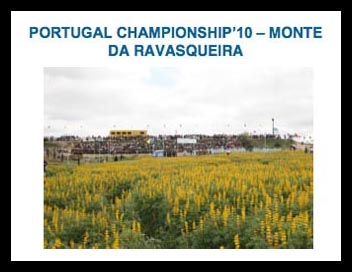
Wednesday December 16 2009
The 2010 Portuguese Championship - CEI*** 160 km Open - Team Trophy
will be held 15-18 April, 2010 at Monte da Ravasquiera estate, in the municipality of Arraiolos, Portugal.
In addition a CEI** 120 km and a CEI * 80 km will be held the same weekend.
The Monte da Ravasquiera has been linked to the family Jose De Mello
for several generations, and produces some of the best wine that the
Alentejo has to offer. The estate has organized and hosted the 1996
First International Friendship Driving Contest, and the 2006 Iberian
Driving Cup.
More Information at:
endurance.net/international/Portugal/2010NationalChampionship
Ravasqueira.com
Tuesday, December 15, 2009
Brazil: Compeonato Brasileiro
Enduroonline.com.br - Mais
Andre Vidiz, Renata Velloso e Carolina Barbosa sagram-se campeoes brasileiros 2009 debaixo de muita chuva
A chuva nao deu tregua desde o final da tarde e toda a noite do dia anterior da prova. O dia amanhaceu chuvoso e a trilha estava altamente escorregadia, mas os competidores demonstraram garra e determinacao. Afinal, estava em jogo o titulo de campeao brasileiro da provas CEI*** 160 km e CEI** 120 km (Adulto e Young Rider).
Marcio Honorio em sua primeira prova de 160 km com Pantheon HTL dominou ate a quinta etapa, quando foi eliminado por manqueira. Antes dele, os cavaleiros que compunham o primeiro pelotao (Eduardo Xavier Barreto Jr com Elanna HEC, Mariana Damazio Rajao com Mustaz SC, Higor de Marchi e Van Herte Sweet e Renata Farinelli com Gran Farhuk) foram saindo etapa apos etapa, abrindo caminho para Andre Vidiz e Nuit Endurance.
Andre Vidiz, Renata Barbosa Carolina Velloso and becoming champions Brazil in 2009 under heavy rain
The rain gave no truce since the end of the afternoon and all night the day before the race. The day awoke to rain and the track was highly slippery, but competitors have shown guts and determination. After all, at stake was the title of champion of the Brazilian evidence CEI *** 160 km and CEI ** 120 km (Adult and Young Rider).
Marcio Honorius in his first race of 160 km with Pantheon HTL dominated until the fifth stage, when it was eliminated by lameness. Before him, the knights who made up the first wave (Eduardo Xavier Barreto Jr Elanna with HEC, Mariana Damazio Rajão with Mustaz SC, Higor de Marchi and Van Herte Sweet and Renata Farinelli with Gran Farhuk) were coming off stage by stage, paving the way for Andre Nuit Vidiz and Endurance.
More...
Portugal: Nations Cup - Trojan Portugal Open 2010
Endurancebrasil.com.br - Mais
Portugal promete um dos maiores feitos no esporte
Troia Portugal Open 2010! Assim foi entitulado um dos eventos de enduro no ano de 2010 que promete marcar historia no esporte. A Taça das Nacoes - Troia Portugal Open 2010 acontecera sob o comando da conceituada Lagos Sports, levando o enduro em Portugal ao mais alto nivel do hipismo, talvez nunca visto antes no pais.
Ja oficializado no site da FEI - Federacao Equestre Internacional, a Taca das Nacoes sera sediada em uma peninsula de Troia, a vinte minutos de Lisboa, em um local com mar, rio, campo, tudo em um so lugar.
Portugal promises one of the greatest achievements in sports
So was titled one of endurance events in 2010 that promises to mark history in the sport. A Cup of Nations - Troia Portugal Open 2010 will take place under the command of the prestigious Lagos Sports, bringing the enduro in Portugal at the highest level of riding, maybe never seen before in the country.
As authoritative on the site of the FEI - Federation Equestre Internationale, the Nations Cup will be hosted on a peninsula of Troy, twenty minutes from Lisbon, in a place where sea, river, field, all in one place.
More...
Portugal promete um dos maiores feitos no esporte
Troia Portugal Open 2010! Assim foi entitulado um dos eventos de enduro no ano de 2010 que promete marcar historia no esporte. A Taça das Nacoes - Troia Portugal Open 2010 acontecera sob o comando da conceituada Lagos Sports, levando o enduro em Portugal ao mais alto nivel do hipismo, talvez nunca visto antes no pais.
Ja oficializado no site da FEI - Federacao Equestre Internacional, a Taca das Nacoes sera sediada em uma peninsula de Troia, a vinte minutos de Lisboa, em um local com mar, rio, campo, tudo em um so lugar.
Portugal promises one of the greatest achievements in sports
So was titled one of endurance events in 2010 that promises to mark history in the sport. A Cup of Nations - Troia Portugal Open 2010 will take place under the command of the prestigious Lagos Sports, bringing the enduro in Portugal at the highest level of riding, maybe never seen before in the country.
As authoritative on the site of the FEI - Federation Equestre Internationale, the Nations Cup will be hosted on a peninsula of Troy, twenty minutes from Lisbon, in a place where sea, river, field, all in one place.
More...
Monday, December 14, 2009
Abu Dhabi: Bahrain riders draw a blank
Gulf-daily-news.com
December 13, 2009
BAHRAIN'S riders drew a blank yesterday in the first round of the Giants Endurance Horse Ride Challenge at the Emirates International Endurance Village in Al Wathba, Abu Dhabi.
During the first of the three rounds, Shaikh Nasser bin Hamad Al Khalifa and other members of the Bahrain team were unable to complete the five-stage event after their horses failed to pass veterinary examinations at the end of the third stage.
The kingdom's other participants were Bahrain Royal Equestrian and Endurance Federation president Shaikh Khalid bin Hamad Al Khalifa, Shaikh Daij bin Salman Al Khalifa and Ahmed Janahi.
UAE's Vice-President, Prime Minister and the Ruler of Dubai Shaikh Mohammed bin Rashid Al Maktoum and his son Shaikh Majed also bowed out of the competition in similar circumstances. The ride was divided into different stages, starting with a 32-km first stage. The second covered 28 kms, the third 24 kms, the fourth 20 kms and the fifth was over 16 kms.
The overall winner was Majed Al Jahouri of the UAE in four hours, 59 minutes and seven seconds for an average speed of 27.07-km per hour.
Riding Bouman Nasrof, the Al Wathba Stables rider was ahead of Federico Zubiaurre (5:03:20) of the Uruguay who was representing Al Ain Endurance Stable.
Ahmed bin Harmash (5:04:26), also of the UAE, steered Havane De Navas of Al Aasfa Ltd to third place.
Behind him was Rashed Ali (5:05:12) of Al Aasfa Ltf in fourth, followed by Anzaq Mehmood (5:06:26) of Pakistan, riding for Shaikh Faisal bin Saqr Al Qasimi Stables in fifth place.
Indian rider Narpat Singh (05:06:38) of Al Aasfa Ltf was sixth while Khalid Al Hammadi (5:22:21) of the UAE's Seeh Al Salam Endurance Stables was seventh.
Break Uruguay's Horacio Diaz (5:22:58) of Emirates Stables managed eighth and he was followed by Taj Mohd Khan of Pakistan, riding for Seeh Al Salam Endurance Stables.
UAE's Rashed Al Darbi from Shaikh Rashid bin Hamdan Al Maktoum Stables rounded up the top 10.
The series will now take a month-long break and is set to resume with the remaining two rounds in January next year.
December 13, 2009
BAHRAIN'S riders drew a blank yesterday in the first round of the Giants Endurance Horse Ride Challenge at the Emirates International Endurance Village in Al Wathba, Abu Dhabi.
During the first of the three rounds, Shaikh Nasser bin Hamad Al Khalifa and other members of the Bahrain team were unable to complete the five-stage event after their horses failed to pass veterinary examinations at the end of the third stage.
The kingdom's other participants were Bahrain Royal Equestrian and Endurance Federation president Shaikh Khalid bin Hamad Al Khalifa, Shaikh Daij bin Salman Al Khalifa and Ahmed Janahi.
UAE's Vice-President, Prime Minister and the Ruler of Dubai Shaikh Mohammed bin Rashid Al Maktoum and his son Shaikh Majed also bowed out of the competition in similar circumstances. The ride was divided into different stages, starting with a 32-km first stage. The second covered 28 kms, the third 24 kms, the fourth 20 kms and the fifth was over 16 kms.
The overall winner was Majed Al Jahouri of the UAE in four hours, 59 minutes and seven seconds for an average speed of 27.07-km per hour.
Riding Bouman Nasrof, the Al Wathba Stables rider was ahead of Federico Zubiaurre (5:03:20) of the Uruguay who was representing Al Ain Endurance Stable.
Ahmed bin Harmash (5:04:26), also of the UAE, steered Havane De Navas of Al Aasfa Ltd to third place.
Behind him was Rashed Ali (5:05:12) of Al Aasfa Ltf in fourth, followed by Anzaq Mehmood (5:06:26) of Pakistan, riding for Shaikh Faisal bin Saqr Al Qasimi Stables in fifth place.
Indian rider Narpat Singh (05:06:38) of Al Aasfa Ltf was sixth while Khalid Al Hammadi (5:22:21) of the UAE's Seeh Al Salam Endurance Stables was seventh.
Break Uruguay's Horacio Diaz (5:22:58) of Emirates Stables managed eighth and he was followed by Taj Mohd Khan of Pakistan, riding for Seeh Al Salam Endurance Stables.
UAE's Rashed Al Darbi from Shaikh Rashid bin Hamdan Al Maktoum Stables rounded up the top 10.
The series will now take a month-long break and is set to resume with the remaining two rounds in January next year.
Subscribe to:
Posts (Atom)
Great Britain: West Sandford rider wins iconic endurance challenge on debut appearance
Julian Johansen and his Arab gelding CF Samuel won the two-day 80km class at the Golden Horseshoe Ride. (Julian Johansen) CreditonCourier....
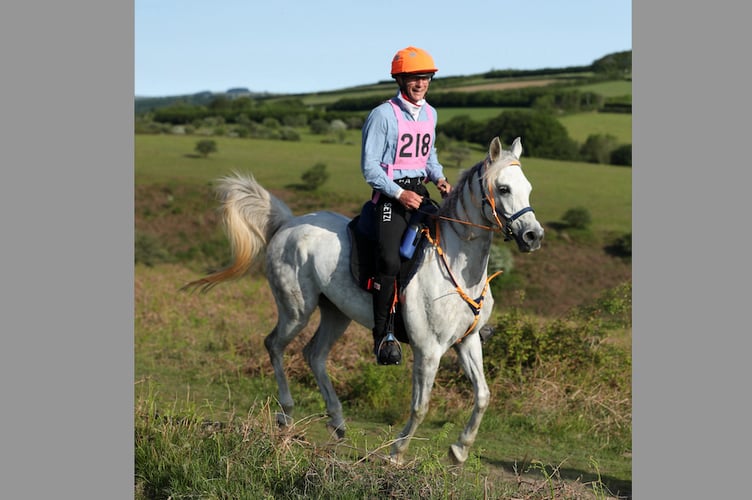
-
 Michael Pollard was one of the four winners of the 2025 Mongol Derby (Kathy Gabriel) Ca.News.yahoo.com - Full Article Annabel Grossman ...
 -
Inside.fei.org 17 December 2020 The FEI Board took a series of key decisions on allocation, cancellation, and reopening of bids for FEI C...
-
BNA.bh - Full Article 17 Aug 2025 London, Aug. 17 (BNA): His Highness Shaikh Nasser bin Hamad Al Khalifa, Representative of His Majes...
